At my graduation party I saw my father slip powder into my champagne glass, so I stood, smiling… when I watched my father tilt a white powder into my champagne glass. His hand steady, his smile unbothered. No one noticed. Not the orchestra, not the guests, not even my sister reaching for her drink beside me. I stood there with the glass warming in my palm, pretending nothing cracked open inside me. They expected me to swallow it quietly like every other silence in this family. Instead, I lifted the flute, smiled back at him, and made a choice. Later, people would ask when everything truly began. I think it was the moment I didn’t drink that night.
I grew up in a house where silence carried more weight than praise. The walls were lined with Ava’s framed certificates, polished trophies, glossy photos of her standing beside judges and coaches. My pictures were there too, but always lower, always smaller, always slightly crooked, as if the house itself understood hierarchy. When I was twelve, I won the state science fair with a project I built on the kitchen floor while everyone else slept. I tested water samples from nearby creeks, charted the chemical runoff on poster board. The morning the results came in, I remember walking into the dining room holding the ribbon like it mattered. Victor didn’t look up from his tablet. Helena scanned the newspaper. Ava was already dressed for her debate tournament, her hair pinned exactly the way our mother liked.
“That’s expected,” Victor murmured, flipping a page. “A Harris should excel.”
Expected, not acknowledged.
Helena finally glanced at the ribbon, not at me. “Your hair looks messy in the picture,” she said, smoothing a wrinkle in the tablecloth. “Next time, stand straighter. Cameras pick up everything.”
That night, Ava’s debate trophy took the center shelf. My ribbon ended up clipped behind a framed photo of her in a tennis uniform. It stayed there for years, half-hidden, collecting dust. The pattern never changed. Holidays were choreographed around Ava’s accomplishments—GPA announcements, internship celebrations, the day she received her acceptance letter to a top business school. Every dinner conversation tilted toward her without effort, like water finding its level. My achievements were treated as logistical updates, scores that needed no applause because they were normal.
When I applied to study environmental science, the house shifted. Victor called it a waste. Helena said no serious person would choose a field with no future. Ava hovered in the doorway while they lectured me, eyes soft but silent. I learned early that compassion without action still feels like abandonment.
The summer before college, I interned with an environmental nonprofit instead of the family company. At breakfast, Victor read the email I’d sent declining their internship offer. He placed his spoon down carefully, the metal barely touching porcelain.
“If you insist on embarrassing this family,” he said, “you’ll pay for your own mistakes.”
I nodded, went upstairs, and filled out a student loan application. The air in my room felt still, almost grateful, like it understood something had finally been named.
The night before I left for college, Helena folded my clothes with the precision she reserved for Ava’s business trips. Not a word about the future, not a hug, not even a lingering look, just a gentle tug on a loose thread on my sleeve, her mouth tightened in quiet disapproval. It wasn’t cruelty. It was a razor so smooth, so consistent it almost felt polite. Looking back, I can see it clearly—the empty seats at my events, the way conversations moved around me, the constant reminder that I was a shadow in a house built to spotlight someone else. That was the day I learned my place in this family.
The hallway behind the rooftop kitchen was narrow, lit by a single flickering bulb. I only went there because the main restroom had a line stretching past the bar. The air smelled of citrus cleaner and overheated metal. I was halfway to the service door when I heard my parents’ voices—low, clipped, urgent.
“She can’t have access to that trust,” Helena whispered. “Not when everything is already unstable.”
“It activates next week,” Victor replied. “If she’s independent, she can talk about the waste, the reports, the samples. You know what that means?”
There was a pause, then his voice dropped lower. “If she’s hospitalized even briefly, the transfer stalls. And if something worse happens before the paperwork clears—”
Helena inhaled sharply. “Victor—”
“It’s precision,” he said. “A controlled setback. Nothing lethal unless she reacts badly. We need time. That’s all.”
My fingers froze around the restroom handle. A quiet, steady burn spread across my chest, slow, almost methodical, like my body was trying to protect me from reacting too fast. They weren’t talking about a punishment. They were talking about a contingency plan—about me. I stepped back before they could round the corner.
The hallway felt colder on the way out, like the building itself had shifted away from me.
Back on the rooftop, the party blurred into a wash of strings and laughter. Guests toasted to futures they didn’t know anything about. Helena’s smile was flawless again, her eyes scanning the room for imperfections to fix. Victor stood by the champagne table, speaking with the head waiter in a voice that could have passed for pride.
When the tray arrived, I watched him choose a single glass, the stem between his fingers, the slight tilt of his wrist, the faint cloudy swirl sinking to the bottom like a secret settling into place. He placed it on the family tray and stepped back as if he’d simply completed a tradition.
Ava appeared beside me, brushing stray hair from her face, laughing at some joke a cousin made. She didn’t notice Victor watching me. Didn’t notice the way his gaze tightened when the waiter extended the tray toward us. I reached for the glass meant for me. My hand stopped. My heartbeat didn’t.
I turned, smiling, the kind of smile that looked good in photos.
“Here,” I said lightly, holding it out to Ava. “Take mine. It’s the nicer pour.”
She didn’t question it. She never had reason to. She lifted the glass, clanked it gently against mine, and drank.
I felt nothing. Not shock, not triumph, just a quiet, heavy certainty settling in my bones. A certainty that whatever came next had already begun.
When Ava’s knees buckled, the party didn’t fall silent all at once. It rippled—first a gasp near the orchestra, then a clatter of silverware, then the dull thud of her glass rolling across stone. By the time I reached her, her skin had gone pale beneath the rooftop lights, her breath thin and irregular. Victor pushed through the forming circle, calling her name with a tightness he’d never once used for mine. Helena’s hands shook as she tried to smooth Ava’s hair, her voice trembling with disbelief.
I knelt beside them, steady, because I had to be. “We need an ambulance.”
No one argued.
On the ride down in the service elevator, Ava’s head rested against my shoulder, her pulse erratic under my fingers. I didn’t let myself think about the poison. Not yet. I watched the numbers blink above the door, listened to the hum of machinery, and kept my breathing slow. Her glass, my glass, the swap, the powder settling into gold liquid. The decisions you make in a single breath don’t disappear just because the room changes.
In the ambulance bay, paramedics took her from me, wheeling her inside under fluorescent lights that made everything look sharp, or too sharp. Helena trailed after them, begging for answers. Victor stayed behind, gripping the railing as if the entire building had tilted.
“You switched the glasses,” he said without looking at me.
I didn’t answer. Silence was safer.
Inside the emergency room, monitors beeped in uneven rhythm. Nurses moved with brisk efficiency. Dr. Shaw, calm but alert, examined Ava with a focus that left no room for panic.
“She collapsed suddenly?” he asked.
“Yes.”
“Any prior medical conditions? Number symptoms escalated quickly. Confusion, tremors, and elevated heart rate that wouldn’t stabilize.”
Dr. Shaw’s eyes narrowed slightly, his professional instincts catching something beneath the surface. “This looks like exposure to an antiolinergic compound,” he murmured, half to himself.
My throat tightened. “Check for modified derivatives,” I said quietly. “Not commercial ones. Research grade.”
Dr. Shaw paused. “Why?”
Because the man standing a few feet away, fists clenched, had access to compounds no one outside the family labs should ever handle. Because I watched him tip a white powder into a glass with the ease of someone who had rehearsed it. But I didn’t say that aloud.
“Just check,” I said instead.
He nodded, already issuing orders.
Detective Hall arrived twenty minutes later, notebook in hand. His questions were gentle at first, routine, procedural, but when he asked what led to Ava’s symptoms, I motioned for Nenah and Jenna, both still pale from what they witnessed. Nenah handed him her phone.
The video played silently—Victor selecting the glass, placing it near the edge of the tray, the subtle drift of powder, then me smiling, switching the glasses, lifting a safer flute to my lips while Ava drank.
Detective Hall rewound the clip, watched it twice more, expression tightening. “I’ll need copies of all recordings,” he said.
“They’re already in your inbox,” Jenna replied.
I hadn’t asked them to do that. They just knew.
As they stepped away with the detective, I sank into one of the waiting room chairs. The vinyl was cold against my palms. The air smelled like sanitizer and recycled air. A vending machine hummed softly near the wall. These small sounds grounded me more than anything else could. They were neutral, predictable, safe.
Victor and Helena sat across from me. He kept his eyes on the floor. She kept hers on the entrance to Ava’s room.
“You’ve misunderstood something,” Helena whispered eventually, voice thin.
I didn’t respond.
“We would never harm our own family,” she added, louder this time, as if volume made it true.
Still, I stayed silent.
It was Dr. Carter who approached next, his face drawn with concern. He’d been at the party earlier, congratulating me with a softness I wasn’t used to receiving. Now he looked at me as if piecing together something he wished he hadn’t guessed.
“I heard what happened,” he said. “If there’s anything, you know, anything that could help—”
“There is,” I replied. “But I’ve already given it to people who can do something with it.”
He nodded slowly, understanding more than I said.
Hours bled together, tests were run, samples processed, more detectives came. Agent Brooks from the Federal Environmental Division arrived with a quiet gravity that shifted the air around him. He reviewed the video. He asked about internal documents, access history. I answered what I could without embellishment, without emotion. Facts were enough.
By the time dawn crept through the far windows, Ava was stabilized, groggy, confused, alive. I stood by her bedside, watching her eyelids flutter open.
“It wasn’t supposed to be you,” I said softly.
Her brows knit weakly.
I didn’t explain. She was still fighting the last effects of the compound. Truth could wait for clarity.
Back in the waiting room, the city was beginning to stir, traffic humming somewhere far below, morning shifts clocking in. I pulled my bag into my lap and began the work I’d been putting off for years. I opened my laptop, typed a list of dates, cross-referenced every strange shipment, every withheld update, every internal memo Margaret had warned me about in her journal, scanned the photocopies of water tests she’d kept at the lakehouse, filed the photos I had taken of the West facilities drainage site, collected screenshots of emails, threats masked as guidance, offers disguised as commands, organized everything into labeled folders—research, environment, trust, corporate missteps, family directives. Nothing dramatic, just truth waiting in neat stacks.
I drafted a message to Clare, the attorney I’d quietly contacted weeks earlier when the house had grown too quiet before graduation.
We need to move forward now.
I sent it without hesitation.
One by one, I closed the tabs tied to my family name, opened new ones tied to my future, scheduled a meeting with the federal investigators, downloaded copies of everything to an encrypted drive, deleted old access links to the family servers. I worked through the sunrise, the waiting room empty except for a cleaning crew pushing carts down the hallway. When I finally stood, stretching my stiff shoulders, the weight I’d carried for years felt lighter—not gone, just no longer strapped to me by force.
I looked once toward the corridor where my parents sat speaking in hushed voices to their lawyer. Their silhouettes were small from this distance, contained, manageable. For the first time, they weren’t the center of the frame. I stepped outside, the early morning air cool on my face, and whispered into the quiet, “This time, I won’t fix what they’ve broken.”
By midday, the hospital had shifted from quiet urgency to controlled investigation. Uniformed officers guarded the hallway outside Ava’s room. A pair of detectives spoke in low tones near the nurse’s station, and beside them, Agent Brooks reviewed the printed toxicology results with a focus sharp enough to cut through steel.
Dr. Shaw approached me first. His expression was steady, but I could see the tension in the way he held the chart, thumb pressed against the corner.
“The results are back,” he said. “Your sister was exposed to a modified antiolinurgic compound, research grade, not available commercially.”
The room didn’t spin. It didn’t even tilt. It simply narrowed until all I could hear was the soft hum of the overhead lights.
“We’ve seen preliminary data on similar compounds,” Agent Brooks said, stepping beside him. “From labs tied to your family’s company.”
Victor and Helena, seated a few feet away, stiffened. Detective Hall tapped his pen against the tablet. “We’ll need statements, all of you.”
They took Victor first. I watched him square his shoulders, slipping into the authority he’d worn his entire life.
“This is absurd,” he began. “Ava must have had a reaction to the food or alcohol. Our family has no history of—”
Detective Hall turned the tablet around. The video of the toast played silently—Victor selecting the glass, the powder settling, the stem in his hand, my smile as I switched the flutes, Ava drinking. It was the cleanest piece of evidence I had ever seen. Quiet, irrefutable, methodical.
Victor’s face drained of color. His mouth opened, closed, opened again. A man accustomed to controlling narratives now stood in front of one he couldn’t bend.
“She drank what was meant for me,” I said. No accusation, no emotion, just a fact placed gently onto the table.
Helena rose from her chair as if pulled upward by wires. “You don’t understand,” she whispered. “We were protecting the family. Everything was falling apart—the investigation, the reports. If those documents went public—”
“So you tried to slow me down?” I asked.
Her silence was confirmation enough.
Agent Brooks spoke next, flipping through a stack of lab access logs. “Mr. Harris signed out the compound three days before the graduation party. And we’ve located a storage unit tied to falsified signatures, documents, research samples, disposal records, all indicating attempts to shift liability.”
Victor shot Helena a look sharp enough to break glass. “You should have kept your mouth shut.”
She flinched.
Detective Hall closed his notebook. “Both of you will be taken into custody pending formal charges.”
Two officers stepped forward. Metal clasps clicked shut. Ava, still weak, watched from her room doorway, leaning on the frame, eyes swollen but clear. When our parents were led past her, she didn’t move, didn’t speak. She just stared at the people who raised us as if seeing strangers for the first time.
Victor turned toward me. “You did this?”
“No,” I said quietly. “You did.”
Helena reached for Ava with trembling fingers. “Sweetheart, please.”
Ava stepped back. She didn’t need to say anything. The distance was its own verdict.
As the officers guided them away, the hallway felt suddenly wider, the air less constricted. No victory, no triumph, just space, clean, empty space where their shadows used to be.
Agent Brooks handed me a card. “We’ll need your cooperation moving forward.”
“You’ll have it.”
He nodded once. “Justice begins with clarity. You’ve given us that.”
When they were gone, I sank into one of the chairs outside Ava’s room. The morning sun filtered through the blinds, leaving thin bars of light across the floor, like the world had quietly shifted into a different shape while we weren’t looking. Ava sat beside me a moment later, her hand finding mine with a steadiness she didn’t yet have in her legs.
“Is it over?” she whispered.
“No,” I said, “but it’s beginning.”
The lakehouse was quieter than I remembered, quieter than anywhere had a right to be. Mornings came in pale layers—mist first, then the thin blue of early light, then the slow reveal of the shoreline, as if the world preferred to wake in increments. I’d wrap my hands around a warm mug, sit on the wooden steps, and let the cold air settle against my skin. After months of sirens, courtrooms, and fluorescent hospital lights, the silence felt almost impossible.
Ava moved carefully around the house those first weeks, still recovering, still building back the strength that the compound had stolen. Sometimes I’d hear her pacing softly upstairs, the creak of old floorboards aligning with her breaths. Sometimes she’d join me outside, wrapped in one of my sweaters, staring at the water without speaking. She had traded her crisp business blouses for simple cotton shirts. Her hair, always perfectly smooth under Helena’s watch, now fell in loose waves. She looked like someone stepping out of a costume she didn’t know she’d been wearing.
Meanwhile, my days took on a new rhythm. I worked remotely with a small environmental restoration group, drafting impact assessments, analyzing chemical footprints, developing plans for cleanup sites, much like the facility my family once operated. There was a quiet satisfaction in using the knowledge I’d gained—knowledge they wanted to suppress—for something that restored rather than concealed.
Every now and then, federal updates came in. Notices about seized accounts, progress reports about soil remediation, transcripts from former employees who finally felt safe enough to speak. I read each one slowly, without celebration, as if digesting a language I’d spent my whole life hearing through closed doors. Closure wasn’t loud. It was administrative, procedural, steady.
One evening, I walked the narrow path behind the house. Leaves cracked under my shoes, the lake catching the last red sliver of daylight. I stopped at the dock, breathing in the scent of cold water and pine. My reflection on the surface looked calmer than I expected—older somehow, but lighter. The rooftop party felt far away, like a film I’d once studied rather than lived through. The glass, the powder, the choice. I could still see each moment sharply, but the urgency had faded. In its place was something else. Not forgiveness, not victory, just release.
Later inside, I found Ava at the kitchen table, sorting through her law school materials. She looked up, offered a tired but real smile. It was the first time in months I saw her eyes without fear behind them.
“There’s still a lot ahead,” she said.
“I know, but it feels different now.”
“It does.”
A breeze moved through the open window, lifting the edge of one of her notebooks. She held it down with her palm, steadying the page. For a long time, we just sat there listening to the quiet—the kind that doesn’t ask anything of you, doesn’t hide anything from you, the kind that finally felt like ours.
I used to think survival meant staying small, staying quiet, folding myself into whatever shape kept the peace. Now, standing on the dock with the lake breathing against the shore, I understand something simpler. Distance isn’t abandonment. It’s recovery. Truth doesn’t need an audience to matter. It just needs space to stand.
My family taught me how silence can wound. Life taught me how silence can heal. And somewhere between those two edges, I found a boundary that finally holds. The life ahead of me isn’t loud or triumphant. It’s mine. And that at last is
The life ahead of me isn’t loud or triumphant. It’s mine. And that at last is
…where everything really starts to feel real.
For a long time, I thought the story ended in that hospital hallway, with metal cuffs clicking around my parents’ wrists and Ava leaning on the doorframe, too weak to stand on her own. It felt like a final scene—credits ready to roll, audience filing out, justice served in a way that looked clean from the outside.
It took months at the lakehouse to understand that what happened in that hospital was just a pivot, not an ending. The real story was whatever I chose to build in the empty space after them.
The lakehouse had been Margaret’s, technically, though in family lore it was always “the property by the water,” spoken about like a line item rather than a place where a person had lived and died and left journals full of notes no one wanted to read. I inherited it the way I inherited everything that made people uncomfortable—quietly, in paperwork, with a clause or two that said I could do what I wanted as long as I paid the taxes.
The first few weeks there were less like healing and more like detox.
The mornings came early and sharp. I’d wake up before Ava, before the sun cleared the tree line across the lake. The house creaked differently than the one we grew up in. This place didn’t hide its age behind polished floors and curated art; the boards groaned openly when I walked down the hall, the screen door wheezed when I pushed it open, the dock complained under my weight every time I stepped onto it. Nothing here pretended.
I started a ritual without meaning to. Mug of coffee in my hands. Wool socks on my feet. Step outside. Sit on the top stair. Breathe.
The mist on the lake always lifted slowly, like it was reluctant to leave. Some mornings it clung low over the surface, blurring the opposite shore until the trees looked like sketches. On those days, I felt like I was sitting at the edge of the world, waiting for it to decide whether or not to appear.
Inside, the house smelled like cedar and old paper. Margaret’s books were still on the shelves, arranged with the casual logic of someone who lived alone and never expected company to judge her choices. Ecology texts leaned against crime paperbacks, field guides to regional birds propped up memoirs written by people who’d burned out young. Thin spiral notebooks were tucked sideways between them—Margaret’s own journals, some labeled by year, some just dated sporadically in the margins.
I started reading them at the dining table one gray afternoon while Ava napped upstairs. The first one I opened was from the year I turned thirteen.
June 12 – The creek behind West Facility smells metallic again. Sampled at dusk. pH irregular. Logged results. No response from management last month. Logged that too.
June 23 – Spoke to Victor in the boardroom. He smiled, thanked me for my diligence, suggested I take a few weeks off “to clear my head.” Logged that.
July 2 – Headache after walking past discharge point. Logged symptoms. Logged silence.
Margaret wrote like a scientist and a woman who’d learned the cost of raising her voice in the wrong room. Facts first. Feelings second, if at all. But every once in a while, a line slipped through that felt like a flare.
The water remembers. Even if they pretend not to.
I flipped the page, feeling something in my chest echo that sentence.
By the time Ava came downstairs, it was late afternoon. She moved carefully, a blanket still around her shoulders like a cape she hadn’t decided to take off yet. Her face had more color than it did in the hospital, but the shadows under her eyes still looked like bruises of exhaustion.
“You started without me,” she said, nodding toward the open journal.
“You were asleep,” I replied. “I didn’t want to wake you.”
She pulled out the chair across from me and sat, fingers tracing the grain of the table. “What’s she saying?”
“She noticed everything,” I said. “The discharge points, the smell, the weird pH readings, the headaches. She documented it all. The part I can’t stop watching is how often she logged the silence afterward.”
Ava exhaled, a slow breath that deflated her shoulders. “Of course she did.”
I turned the notebook so she could see. “You want to read?”
She hesitated. “Not yet. Can you… tell me instead?”
So I did. I read Margaret’s observations aloud, translating some of the shorthand, filling in gaps with what I’d learned in school and in the field. Ava listened, eyes on the table, expression tightening every time our father’s name appeared in the margins—Victor said this. Victor approved that. Victor declined meeting.
“She tried to go through him,” Ava murmured. “Of course she did. He was the path. He always made sure he was the path.”
“He made sure he looked like the path,” I corrected. “There’s a difference.”
Ava swallowed and nodded. “Right.”
We fell into a rhythm that first month. Mornings were quiet—coffee, mist, the sound of distant birds. Afternoons were for work—my reports for the restoration group, Ava’s slow return to reading legal texts in short bursts before the headaches came. Evenings were when we let ourselves talk about anything that hurt.
Some nights we didn’t talk about our parents at all. We talked about the ridiculous, small things that had slipped through the cracks of our childhood. The time I got a nosebleed in the back of the car and bled all over Helena’s favorite silk scarf. The year Ava tried to cut her own bangs the night before a school photo and Helena cried like someone had died. The Christmas when Margaret gave us both identical sets of binoculars and whispered, “You need tools if you’re going to see what people want you to miss.”
Other nights, the pain sat closer to the surface.
One evening, after a day of rain that turned the path to the dock into a slick ribbon of mud, I found Ava sitting cross-legged on the living room floor, surrounded by boxes we hadn’t opened yet. She had one of Margaret’s photo albums in her lap.
“Look at this,” she said, holding it up.
The picture was from a Fourth of July long ago. Fireworks burst in the background, frozen mid-explosion. Margaret stood in the foreground, one arm around a much younger version of me, the other around Ava. We were both grinning, faces smudged with something that might have been soot or chocolate. Victor and Helena were nowhere in the frame.
“I don’t remember this,” I said.
“I do,” Ava replied softly. “They were at some fundraiser. Grandma had slipped on the back steps the week before, so they sent Margaret instead. She took us to the lake to ‘celebrate independence,’” she added, making air quotes. “She let us eat ice cream before dinner. She let you light sparklers.”
A faint memory surfaced—the dizzy thrill of holding a sparkler too close, Margaret’s hand firm around my wrist as she guided it away from my hair, her laugh warm in my ear.
“She wrote about that day,” I said. “In one of the journals.”
Ava’s eyes flicked up. “She did?”
“She wrote that it was the only time she saw you forget to stand up straight for a photo.”
Ava stared at the picture, her expression crumpling around the edges. “I didn’t know how not to,” she whispered. “Not around them.”
We sat there for a long time, the photo album open between us, the sound of rain on the roof filling the space where words would’ve been. Eventually, Ava closed the book and lay back on the rug, staring at the ceiling.
“Do you ever feel like I was… part of it?” she asked. “Part of what they did to you?”
The question had been hovering between us since the hospital, fragile and sharp. Hearing it out loud made my throat tighten.
“You were in the center of the spotlight,” I said carefully. “I was standing in the dark. That wasn’t your fault.”
“That’s not the same as answering,” she whispered.
I lay down beside her, shoulder to shoulder, both of us watching the slow creep of shadows from the ceiling fan.
“I think you benefited from it,” I said. “In ways you didn’t always see. And I think sometimes you didn’t want to look too closely, because it was comfortable there. Because they made sure it was. But when it mattered—when you had a choice—you took the glass without question because you never thought they’d hurt you. You never thought they’d hurt either of us.”
Ava’s jaw clenched. “I should have questioned them sooner.”
“We were kids,” I said. “Then we were teenagers. Then we were the products of that house. By the time you had any kind of perspective, you were already deep in the storyline they wrote for you.”
She swallowed hard. “That sounds like a very kind way of saying I was complicit.”
I turned my head to look at her. “You almost died because he miscalculated his own cruelty. That’s not complicity. That’s collateral damage in a story he thought he controlled.”
Her eyes filled anyway. “I should’ve seen you more clearly,” she whispered. “Not just the version of you they described at the dinner table.”
Silence settled over us, but it wasn’t the old, heavy kind that pressed down and suffocated. It was thinner, more fragile, like new skin.
“I won’t pretend it didn’t hurt,” I said finally. “The years of you nodding along every time they minimized my work, the way you let Mom talk about my degree like a hobby. It did. It does. But we’re here now. You’re at this lakehouse with me. You’re reading Margaret’s notes. You’re… choosing differently. That matters.”
Ava blinked, tears slipping sideways into her hair. “I don’t know how to make it right.”
“Maybe the point isn’t making it right,” I said. “Maybe the point is not repeating it.”
She let out a breath that sounded halfway between a sob and a laugh. “You sound like a therapist.”
“I sound like someone who’s been taking a lot of notes,” I replied, glancing at the journals stacked nearby.
We stayed like that until the rain eased and the room darkened. At some point, Ava’s hand found mine, our fingers tangling loosely. It felt less like forgiveness and more like an agreement to show up for whatever came next.
What came next, predictably, was court.
The first subpoena arrived on a Thursday, folded in on itself like an origami threat. Clare called before I finished reading it.
“Don’t panic,” she said. “This is procedural.”
“I’m not panicking,” I lied, staring at the legal language that officially named me as both victim and key witness.
“We knew it was coming,” she reminded me. “The DA is moving forward. The feds are coordinating. They’re not letting this go.”
I sank into the chair by the kitchen window. Outside, Ava was on the dock, sitting with her feet dangling over the water, her shoulders hunched against a wind I couldn’t feel yet.
“How bad is it going to get?” I asked.
“It’s already bad,” Clare said bluntly. “The question is whether we let it stay buried inside your family’s version of events or we let it live in the record where it belongs. There are two tracks here—criminal and civil. The criminal side is about what Victor and Helena did at that party and what they signed off on in those labs. The civil side is the trust, the environmental damage, the people downstream who’ve been drinking whatever West Facility dumped for years.”
I pressed my thumb into the edge of the subpoena until the skin went white. “I know.”
“What you need to decide,” she continued, “is how visible you want to be once it starts. You have the evidence. You have the journals. You have your aunt’s notes and your own reports. You also have the right to say no to being the poster child for any of it.”
A part of me wanted to say exactly that. No. Let the government handle it. Let the agencies and departments and alphabet soup of organizations do what they were supposed to have done years ago. I was tired of being the one who noticed the water.
But another part of me remembered Margaret’s handwriting in the margins. Logged silence.
“No,” I said quietly. “I’m not stepping back. They counted on me staying in the dark. I won’t give them that.”
“Okay,” Clare said, and I could hear the shift in her voice from cautious to ready. “Then we do this properly. I’ll prep you for testimony. The investigators will go over your reports again. And you get to decide what you keep for yourself, even while you tell the truth.”
“Is that allowed?” I asked.
“It has to be,” she replied. “Otherwise they take everything.”
The months between that call and the first day of trial blurred into a series of rooms.
Conference rooms with long tables and glass walls where Agent Brooks laid out diagrams of drainage systems and supply chains. Small offices with file cabinets lining the walls where I sat on metal chairs and answered detectives’ questions for the third, fourth, fifth time. A beige-walled meeting space in the county courthouse where Clare ran me through mock cross-examinations until I couldn’t tell if I was reciting my own life or performing a play about someone else’s.
Ava came to some of those sessions. To others, she stayed at the lakehouse, working slowly through application essays for law school programs that specialized in environmental and public interest law.
“I feel ridiculous,” she said one night, laptop open on her knees, the prompt glowing on the screen: Describe a moment that changed the trajectory of your life.
“You were poisoned at my graduation party,” I pointed out. “I think you’ve got something to work with.”
She snorted despite herself. “Too dramatic?”
“Not if you tell the truth,” I said. “It’s not a script. It’s a record.”
Her fingers hovered over the keys. “What if they only see me as… his daughter? What if I never get out from under that?”
I leaned against the doorframe, watching her. “Then you show them you’re Margaret’s niece,” I said. “You show them you’re the one who decided the story doesn’t end with what he chose.”
“Do you ever get tired of being right?” she asked dryly.
“Constantly,” I replied.
When the trial date finally arrived, the lake was just beginning to thaw. Patches of ice still floated near the far shore, thin and translucent, like ghosts of a season that wasn’t ready to let go. We drove into the city before dawn, the roads mostly empty, the courthouse rising ahead of us like something out of a civic textbook—columns, steps, the whole American promise carved into stone.
Inside, everything smelled faintly of coffee and disinfectant. The hallways were full of low voices and shuffling papers, the soft squeak of rubber soles on polished floors. I’d only ever been in courtrooms on television before. The real thing felt both smaller and more dangerous.
Victor and Helena sat at the defense table when we walked in, flanked by their attorneys. Seeing them there was like looking at a portrait that had been badly lit—same lines, same posture, but every shadow harsher.
Victor wore the same kind of suit he’d worn to board meetings my whole life. His hair was a little thinner at the temples, his jaw tighter, but he still carried himself like someone who expected people to stand when he walked into a room. Helena’s hair had more gray in it now, twisted into a low chignon that probably took longer to secure that morning than any of us could guess. Her pearls were still at her throat, the same ones she’d adjusted when she told me Gregory deserved my wedding-room bed more than I did at Vivien’s wedding years ago. The echo of that memory made my stomach twist.
They both looked up when we entered. For a moment, his eyes met mine. There was something like recognition there and something like baffled contempt. How did you drag us here? the look asked. How did you get out from under our thumb?
Ava’s hand tightened around my arm. “We don’t have to sit where they can see us,” she murmured.
“We’re not moving because he looked at me,” I said quietly. “He doesn’t get that.”
We took our seats behind the prosecution’s table. Clare sat in front of us, her posture relaxed in a way I knew was practiced. The assistant district attorney, a sharp-eyed woman named Martinez, shuffled through her notes, lips moving silently as she ran through her opening in her head.
The judge entered. We all rose. The bailiff droned the familiar words I’d only ever heard through speakers or decades of courtroom dramas. Then, just like that, it began.
Martinez opened with the party.
She spoke calmly, laying out the timeline: the rooftop venue, the graduation toast, the glass, the powder. She referenced the video without playing it yet, letting the jury’s imagination fill in the spaces. Then she stepped back to show the longer road that led there—environmental reports, internal memos, Margaret’s journals.
“This case is not about a single moment of poor judgment,” she said, voice steady. “It is about a pattern of decisions made by people in positions of power who believed they were above consequence. It is about the lengths they were willing to go to in order to silence the one person in their family who refused to look away.”
She didn’t look at me when she said it. She didn’t need to. The jurors did.
The defense went second. Their lead attorney, a man with a varnished kind of charm, tried to frame everything as an unfortunate chain of events. Ava’s collapse, he suggested, might have been an allergic reaction. The glass swap a misunderstanding. The compound—if it was confirmed to be a modified research chemical—was something Victor had signed out for legitimate testing purposes weeks before. The video, he argued, lacked context. The journals represented the paranoid ramblings of a disgruntled employee.
Margaret’s name in his mouth made my hands curl into fists.
“Breathe,” Clare whispered without looking back at me.
“I’m fine,” I muttered.
The first few witnesses were technical. Lab managers, environmental experts, forensic chemists. They laid the groundwork with charts and diagrams, explaining how the compound had traveled through Ava’s bloodstream, how the discharge patterns from West Facility aligned with the contamination data the government had been quietly collecting for years.
Then it was my turn.
Walking to the stand felt like walking into the center of a spotlight I never wanted but had chosen anyway. The oath tasted strange on my tongue—so many years of being told to keep things in the family made the idea of swearing to speak the whole truth feel almost rebellious.
Martinez started gentle.
She had me describe the party, the hallway behind the rooftop kitchen, the conversation I overheard. She let my words carry the weight of what I’d heard—hospitalization stalls the transfer. A controlled setback. Nothing lethal unless she reacts badly.
“How did you feel when you heard your parents say those things?” she asked.
I thought about answering the way their attorney probably wanted me to—as an emotional daughter, wrecked by betrayal, easily rattled. Instead, I reached for something truer.
“I felt… confirmation,” I said slowly. “I’d always suspected that the way they dismissed my work, the way they refused to engage with my research, wasn’t just about disappointment or control. Hearing them talk about the trust that way, about my independence as a threat, made it clear. This wasn’t about what was best for me or even for the family. It was about protecting themselves from the consequences of their choices.”
Martinez nodded, letting the answer hang for a moment before moving on. She asked about Margaret, about the journals, about the lakehouse and the boxes of notes I’d catalogued. She walked me right up to the moment at the champagne table.
“Why did you switch the glasses?” she asked finally.
The courtroom was silent. I could feel every gaze on me—jurors, judge, audience, reporters, my parents.
“I saw him put the powder in,” I said. “I knew it wasn’t sugar or anything benign. Victor doesn’t do benign gestures. I knew he’d heard enough through the grapevine to know I wasn’t backing down about the reports. I knew the trust was about to activate. I knew the easiest way to discredit someone who’s telling the truth is to label them unstable. So when I saw that powder, I understood exactly what he was trying to do.”
“And you decided to let your sister drink it instead?” the defense attorney would later press, but for now, this was Martinez’s space.
“I decided not to let myself disappear on his timetable,” I said. “I decided not to drink what he thought I would swallow. I didn’t know what the compound was or how fast it would act. I only knew I was done being the only one who paid the price for his decisions.”
“Did you intend for Ava to be harmed?” Martinez asked.
The question sliced cleanly through the air.
“No,” I said, the word immediate, solid. “I expected him to stop me. Or to step in. Or to realize—finally—that what he was doing had crossed a line even he couldn’t talk his way around. The fact that he didn’t… that’s on him.”
Martinez nodded once. “No further questions.”
The defense attorney approached, adjusting his cufflinks as if we were about to have a polite conversation over coffee.
He tried to frame what I’d done as reckless. He suggested that my education and professional background meant I understood the risks better than anyone in the room. He implied that I had orchestrated the moment for maximum impact—that I’d wanted the public collapse, the dramatic evidence. He asked whether I felt guilty when I watched Ava hit the ground.
“Yes,” I answered simply. “Of course I did. I still do. That’s why I brought her head onto my shoulder in the elevator. That’s why I stayed with her in the ambulance. Guilt and responsibility aren’t the same thing.”
“So you admit you played a role in what happened,” he pounced.
“I admit I made a choice not to drink a glass my father prepared after hearing him discuss ways to keep me from accessing a trust tied to evidence of environmental crimes,” I said evenly. “If you’d like that phrased more simply for the record, I can try.”
A few jurors almost smiled. The attorney’s jaw tightened.
Clare’s expression, from her seat, didn’t change, but I could feel her approval like a hand at my back.
Later, they called Ava.
Watching her walk to the stand, still thinner than she’d been before the party but standing straighter than I’d ever seen, was like watching a new version of her step out of an old skin. She didn’t glance at our parents. She didn’t look toward the defense table at all.
She talked about the childhood I’d described from my corner of the house, but from center stage. She described the pressure of being the chosen one, the way Helena had taught her to take up exactly the right amount of space and no more, the way Victor had turned every achievement into a stepping stone toward their version of success.
Then she talked about the party. The dizziness. The way the room tilted. The terror of knowing something was wrong and not knowing what.
“Do you blame your sister for what happened to you?” Martinez asked quietly.
Ava looked at me then, just once. “No,” she said. “I blame the people who decided that hurting one of their children was an acceptable risk if it protected their reputation and their money.”
“And who are those people?” Martinez asked.
Ava turned back to the jury. “Victor Harris and Helena Harris,” she said, voice steady.
Our parents flinched as if the formal use of their names hurt more than any accusation.
The trial stretched for weeks. We went home to the lakehouse every night we were allowed to, the drive back feeling longer each time. Some evenings we sat on the dock in silence. Others we dissected every question, every answer, as if replaying it could change anything.
It couldn’t. But it kept the old patterns from creeping back in.
The verdict came on a Tuesday afternoon that smelled like wet pavement. The courtroom was packed. I could feel the collective inhale when the jury filed back in, their expressions arranged in that neutral mask people wear when they’re about to rearrange lives.
Guilty on multiple counts—attempted poisoning, reckless endangerment, conspiracy to obstruct environmental investigations. Guilty on charges tied to falsified records and improper disposal practices. Not guilty on one minor count that barely registered in the roar of everything else.
Helena sobbed quietly, one hand clamped over her mouth. Victor didn’t make a sound. His face drained of color, then turned a mottled shade somewhere between gray and red. For the first time in my life, he looked small to me—not in stature, but in scope. A man, not a monolith. A man whose choices had caught up.
Sentencing took place a month later. By then, the media storm had crested and begun to fade, drifting toward the next outrage. Environmental groups still sent emails. People in the small town near West Facility still showed up at hearings, their faces drawn with a mixture of anger and exhaustion. But for most of the country, we were already a headline they’d scrolled past.
The judge gave a lengthy statement about deterrence and responsibility. He spoke about the trust between corporations and the communities they served, about the duty of care parents owed their children—not just emotionally, but physically, medically, ethically. When he handed down the years, the fines, the restrictions, there was a quiet gasp from the gallery.
I didn’t feel triumph. I felt tired.
Afterward, the prosecutor offered us the chance to give victim impact statements. Ava declined. She said everything she needed to on the stand. I almost declined too. Then I thought of Margaret, of all the times she’d logged silence as part of the story.
So I walked to the podium.
I didn’t talk about the champagne or the party or the trust. The court had heard enough of that. Instead, I talked about the water.
I talked about kids in that small town going to sleep with headaches their parents chalked up to too much screen time. I talked about Margaret standing alone at the edge of discharge points, sniffing the air, scribbling numbers in notebooks no one would read until after she was gone. I talked about the way corporations liked to calculate harm in terms of acceptable risk, and how that phrase had bled into our family’s private language too.
“At home,” I said, “you turned everything into a cost-benefit analysis. Was my field of study worth the investment? Was my independence worth the risk to our reputation? Was my mental health worth monitoring if it might make me less compliant?”
My voice didn’t shake. It surprised me a little.
“You taught me—and Ava—that silence could protect us if we used it correctly. Smile at the donors. Don’t upset the board. Don’t talk about the headaches at the lake on holidays. Don’t mention the dead fish near the drainage site. Don’t make a scene. Tonight, and in every hearing that comes after this one, I’m choosing not to pass that lesson on. If I ever have children, they won’t grow up thinking that love looks like calculated harm. They won’t grow up thinking that safety means never telling the truth in public.”
I looked briefly toward where they sat. Helena’s shoulders shook. Victor’s hands were clenched together so tightly his knuckles were white.
“You had every opportunity to stop this a long time ago,” I said. “You chose not to. That’s on you. The work of repairing what you broke—the communities you hurt, the water you poisoned, the silence you taught us—that’s on us. But we’ll do it without you.”
When I finished, the courtroom buzzed softly—even if the judge would later instruct the gallery to maintain decorum. The words didn’t change the sentence. They didn’t lengthen the years or increase the fines.
They weren’t for that.
They were for the record.
Life after sentencing was less cinematic than anything that came before it.
There were no more dramatic courtroom reveals, no more viral video clips, no more reporters waiting outside the house. Instead, there was paperwork. Always paperwork. Consent forms for medical follow-ups. Documentation for the environmental remediation projects. Legal agreements for the restructuring of the company, which was now under new management with federal oversight.
There were also, unexpectedly, apologies.
Not from Victor or Helena. That would’ve required a kind of self-awareness they’d never cultivated. Their letters—when they came—were more about their own suffering, their own sense of betrayal at being “abandoned.” I stopped reading after the second one.
The apologies that mattered came from other people. Former board members who admitted they’d looked away. Distant cousins who confessed they’d believed the narrative about me being “difficult” because it was easier than questioning the family’s golden couple. Employees at West Facility who’d convinced themselves that the smell in the air was normal, that chronic coughs were just seasonal.
“I should have listened to Margaret,” one older engineer wrote in a shaky hand. “I’m sorry I didn’t.”
“I remember your science fair project,” a former neighbor emailed. “I thought it was cute. I should’ve thought it was alarming.”
I didn’t respond to most of them. I didn’t have the bandwidth to hold their regret on top of my own. But I read them. Sometimes late at night, sometimes in the pale margin of morning before the sun fully turned the lake silver.
Ava and I built lives quietly, like stacking stones.
She got into a law program that made her eyes light up when she talked about it—one that didn’t flinch at her last name, one that looked at her personal statement and saw more than a scandal. She split her time between the lakehouse and the city, commuting by bus and train, learning to love cheap coffee and crowded libraries. She stopped wearing the kind of heels Helena had insisted on and started favoring soft-soled shoes that let her move quickly from one campus building to another without thinking about how she sounded.
Her hair grew out. She let it curl.
I took on more work with the restoration group. We expanded our focus from one region to several, consulting on cleanup strategies, community outreach, long-term health monitoring. Some days I was waist-deep in waders, sampling water that smelled better than what I’d grown up around but still carried traces of chemicals with names that sounded like curses. Other days I sat in gymnasiums and church basements, explaining in simple terms what contaminant levels meant, what timelines people could expect, what advocacy looked like in practice.
People trusted me in a way I still wasn’t used to.
Maybe it was because I never told them everything was fine when it wasn’t. Maybe it was because I didn’t pretend the process would be quick or easy. Maybe it was because somewhere, deep in my bones, I knew what it felt like to be told that what you were feeling was an overreaction.
At the lakehouse, we made small changes as we could afford them. We replaced old pipes. We installed a proper filtration system. We set up rain barrels and a small garden. The house went from being a holding space—a liminal, in-between place—to being something that looked suspiciously like home.
One fall afternoon, about two years after the verdict, a letter arrived with a federal seal on it. For once, it wasn’t about compliance or updates or deadlines. It was an invitation.
“We’d like you to consider serving on an advisory panel,” Agent Brooks wrote. “Your experience navigating both the scientific and personal aspects of corporate environmental misconduct could provide valuable perspective.”
I read the letter twice. Then a third time. Then I walked down to the dock where Ava was sprawled with a casebook over her face, blocking the sun.
“They want you to be official now,” she said when I told her, voice muffled by the pages. “Dr. Harris, Environmental Avenger.”
“I’m not a doctor,” I said automatically.
“You’re more qualified than most of the people who try to sell themselves that way on TV,” she replied, lowering the book enough to squint at me. “Are you going to do it?”
“I don’t know,” I said honestly. “Panels mean more meetings. More compromise. More politics.”
“Panels also mean your voice in rooms where they decide who gets listened to,” she pointed out. “You hate those rooms. But you also hate what they do without you.”
She wasn’t wrong.
“Maybe,” I said.
That night, I sat at the dining table with Margaret’s journals spread out in front of me like a council. I flipped through them, reading entries at random. In one, she’d written about thinking of quitting. In another, she’d listed the names of every kid on the bus route who lived downstream from West Facility. In a later one, written not long before her death, she’d scrawled in shaky letters:
If they ever actually listen, I hope it’s to someone who can stand to stay in the room longer than I could.
I picked up a pen and wrote my answer to Brooks.
I’ll serve, I wrote. Under one condition: the panel includes at least two members from affected communities, not just scientists and lawyers.
When his reply came back a week later agreeing to the terms, I felt something shift again—not as dramatically as a glass breaking on stone, but like a weight redistributing.
The life ahead of me still wasn’t loud. It still didn’t look like the kind of triumph Helena would’ve recognized. There were no magazine spreads, no gala invitations, no plaques on a wall with my name in gold. There were long days, tired feet, occasional wins that felt smaller on paper than they did in people’s lungs and rivers.
But it was mine.
On the third anniversary of the party, I went back to the city alone.
Ava had a final to study for. The panel had meetings scheduled the following week. There was no practical reason to make the trip that day. But something in me wanted to stand on that rooftop again, to look at the place where my father had tilted a powder into a glass and thought he’d written the ending to my story.
The venue had been repurposed—no longer marketed as a graduation hotspot, just another event space in a skyline full of them. The elevator ride up felt shorter this time. Less like being carried toward a cliff, more like just moving through floors.
The staff member who let me onto the rooftop recognized my name when I signed the visitor log, but she didn’t say anything. If she had questions, she kept them to herself. I appreciated that.
The rooftop looked smaller too. The strings of lights were the same kind you could buy at any hardware store. The stone tiles had a few more chips in them. The spot where Ava’s glass had rolled was indistinguishable from every other section of floor.
I walked to the edge and looked out at the city. Buildings rose and fell in neat, manufactured rhythms. Somewhere below, people were going about their days, sipping coffee, rushing to meetings, laughing at jokes that would evaporate before they hit the air properly.
I thought of all the versions of me that could have existed if that night had gone differently. The version who drank the glass and woke up in a hospital with her credibility shredded. The version who never overheard the hallway conversation and spent her life wondering if she was being dramatic. The version who took the trust money quietly and never touched the reports, choosing comfort over conflict.
None of them were here.
Instead, there was me—the woman who had survived not because she was cleverer than her father, but because she’d grown tired of swallowing his decisions like medicine.
I didn’t stay long. Just long enough to feel the wind tug at my hair, to let the memory of that night settle into its new shape in my mind. Not as a nightmare, not as a legend, but as a fact.
On the way back down in the elevator, I caught my reflection in the mirrored wall. For a second, I saw the version of myself from that night—wearing the dress Helena had insisted on, the smile trained for family photos. Then, as the floor numbers blinked down, the image shifted. The woman in the reflection wore scuffed boots and a weathered jacket. Her hair was pulled back in a way that made sense for fieldwork. There was mud on her jeans and a line of sunburn on her nose.
She looked like someone I recognized.
At the bottom floor, my phone buzzed. It was a message from Ava.
How’s the view? she’d written.
Smaller than I remember, I typed back. But the air’s cleaner where I am now.
When I got home that evening, the sun was just kissing the tops of the trees by the lake. Ava was on the dock, a stack of papers beside her.
“Grading?” I asked, toeing off my shoes.
“Peer review comments,” she said, rolling her eyes. “Apparently my latest article draft ‘leans personal.’”
“Does it?”
“It leans honest,” she said. “Some people have trouble telling the difference.”
I sat beside her, letting my feet dangle over the water. The surface rippled gently, catching the light in broken, shifting patterns.
“Do you ever wish things had been different?” she asked after a while. “Like… that we’d had normal parents. Normal problems. Normal family drama about whose turn it was to host Thanksgiving instead of whose turn it was to testify?”
“Yes,” I said. “All the time.”
She nodded, as if she’d expected that.
“But,” I added, “if things had been different, you might still be at some consulting firm cleaning up their image instead of pushing for real change. And I might still be at a lab whose funding depended on not asking too many questions about where the runoff went.”
“So we’d both be technically fine and existentially miserable,” she summarized.
“Probably,” I said.
She leaned her head on my shoulder. “I like this version better.”
“Me too,” I said.
The sky deepened above us, shifting from gold to blue to something that looked almost purple at the edges. Frogs started their night chorus along the shore. Somewhere across the lake, a dog barked once and then fell silent.
For years, I’d measured my life against the noise inside that old house—the clink of Victor’s glass, the click of Helena’s heels, the applause for Ava’s trophies. I’d thought the absence of that noise would feel like loss.
Instead, it felt like space.
Space to build a different kind of story. Space to listen to the sound of water lapping against wood and know that this time, if it changed—if it smelled wrong or tasted off or shimmered with something unnatural—I wouldn’t be the only one willing to say it out loud.
The life ahead of me still isn’t loud or triumphant.
It’s early mornings on the dock with a mug of coffee. It’s muddy boots and long reports and community meetings in fluorescent-lit school gyms. It’s Ava falling asleep over law textbooks at the dining table Margaret once covered in notebooks. It’s phone calls from neighbors asking if I can come look at their well, emails from students asking for advice on research projects, quiet dinners where no one asks who in the family we might embarrass.
It’s the steady, unremarkable work of not turning away.
It’s mine.
And that, at last, is enough.
News
On New Year’s Eve, My Parents Shut Down My Proposal, Saying “You Shouldn’t Carry The Family Name,” & That My Brother Should Marry First. So I Cut Ties & Moved On — Until Yrs Later A Hospital Confession Revealed Why I Was Only Kept In Their Lives At All.
On New Year’s Eve, My Parents Shut Down My Proposal, Saying “You Don’t Deserve To Carry The Family…” On New…
I Walked Into My Brother’s Engagement Party. The Bride Whispered With A Sneer: “The Country Girl Is Here!”. She Didn’t Know I Owned The Hotel Or That The Bride’s Family Was About To Learn…
They Mocked Me at My Brother’s Engagement — Then I Revealed I Own the Company They Work For And… I…

My Wife Took Over Her Father’s Company After His Sudden Passing. Three Days Later, She Slid My Badge Across The Desk And Said, “Your Role Here Is Over.” I Didn’t Argue. I Just Checked The Calendar—Because The Board Meeting Scheduled For Friday Was Set At My Request, And She Didn’t Know Why Yet.
My Wife Took Over Her Father’s Company After His Sudden Death. Three Days Later, She Removed My Access Badge and…
My Fiancée Said I Was Too “Safe” Right Before Our Wedding. She Asked For A “Break” To See What Else Was Out There…
My Fiancée Said I Was Too Safe Before Our Wedding. She Took a “Break” to Date Someone More… Sarah leaned…
My Brother Demanded To Propose At My Wedding Because “He’s Older.” My Parents And Grandma Took His Side. I Didn’t Argue— I Just Saved Every Message, Quietly Confirmed Every Detail With The Wedding Team, And Let Him Think He’d Won. He Still Showed Up Ready To Steal The Moment… And That’s When My Plan Kicked In. By The End Of The Night, He Wasn’t The One Getting Cheers.
My brother demanded to propose at my wedding because he’s older. My Brother Demanded To Propose At My Wedding Because…
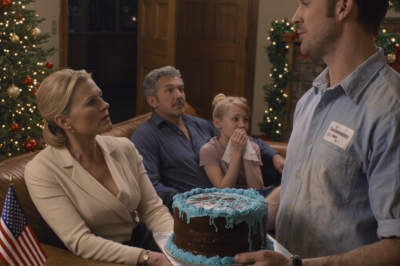
I Came Home On My 23rd Birthday With A Grocery-Store Cake. Mom Said, “No Celebration This Year—Your Sister Needs All Our Attention.” So I Packed A Bag That Night And Disappeared. Years Later, I’m Doing Better Than Anyone Expected—And Now They’re Suddenly Acting Like Family Again.
When I posted that story, I expected maybe a handful of comments and then it would disappear into the Reddit…
End of content
No more pages to load