At The Inauguration Party On Her First Day, She Said “You’re Fired.” Three Hours Later…
The applause for my sister’s inauguration was still echoing when her voice sliced straight through it.
“You’re fired. Security will escort you out.”
For a second, I thought I’d misheard her. The sound system in the ballroom bounced everything off marble and glass, stretching syllables into echoes. But no one laughed. No one said she was kidding. No one stepped in.
I was still holding my champagne flute. I hadn’t even raised it for the toast.
The ballroom froze around me—chairs half-turned, servers paused with trays of canapés midair, lights trembling over crystal centerpieces. Two hundred eyes landed on me like a spotlight I never asked for.
No one moved. Not my parents at table three. Not my brother leaning back like a prince at table one. Not the board members who’d watched me quietly do the work no one else wanted to do for sixteen years.
I didn’t plead.
I didn’t argue.
I reached down, unclipped the glossy badge from my neck, and set it on the linen tablecloth beside the untouched champagne.
“Guest – Cheryl Lawson,” the laminate read.
Guest.
Not “family.” Not “executive.” Not “majority shareholder.”
Just guest.
I smoothed the lanyard flat with my fingertips, then turned and walked toward the doors as the silence folded in behind me like a heavy curtain. I could feel people staring, feel my mother’s hand flutter uselessly toward her necklace, feel the smug little twist at the corner of my sister’s painted mouth.
They thought the humiliation ended there.
It didn’t.
It was only the first minute of the countdown.
I grew up in North Kansas City, in a house that always smelled like coffee, printer toner, and whatever stress my father carried home from the warehouse that day.
He called it “the business.” Never a small business, never a family business. Just “the business,” like it was some living thing that demanded constant feeding.
By the time I was ten, I knew the difference between net and gross. By twelve, I could tell from the set of my father’s shoulders whether a client had paid on time. By fourteen, I wasn’t allowed to touch the remote when the Chiefs were playing, but I could reconcile a week of invoices without looking at a calculator.
Vanessa, my older sister by two years, learned something different. She learned where to stand so the light hit her hair just right when Dad’s friends came over. She learned how to laugh at his jokes and nod at the right moments when he talked about expansion and opportunity. She learned the names of every investor’s wife and what wine each of them preferred.
Our younger brother, Aiden, arrived halfway through the climb from one rented warehouse to the next. By then, Dad was less interested in teaching and more interested in showing off. Aiden learned how to talk like he’d already earned a corner office before he ever swept a floor.
I was the one who learned how to keep the books straight.
The warehouse we worked out of back then sat off a road that always flooded in the spring. A concrete rectangle, metal shelves stretching up to the humming fluorescent lights, the air smelling like cardboard, dust, and the faint tang of forklift exhaust.
I still remember the day I turned nineteen and Dad called me into the office—a space carved out of the warehouse by glass walls and a door that never quite closed all the way.
He stood beside a folding table, sleeves rolled up, a stack of shipping reports in one hand and a crisp white folder in the other.
“Got something for you,” he said, already half-distracted. “A real job now. Not just ‘helping out.’”
He set the folder down in front of me and flipped it open. Inside was a printed contract with my name—Cheryl Lawson—spelled correctly for once. The salary number underneath made my heart do a strange double beat. None of my friends from community college were seeing anything close to that.
“Take it,” he said, already turning toward the reports.
Behind him, Vanessa leaned against a filing cabinet, twirling a set of keys between her fingers—the keys to the new upstairs office Dad had given her the week before. She was twenty-one, loud, photogenic, always the one he nudged toward the camera when investors wanted a picture with “the next generation.”
She wiggled the keys, smirking. “Don’t overthink it, Cher. It’s a good deal.”
I looked down at the salary figure, then at the margins, where someone had smudged printer ink with a thumb. My own half-page proposal, the one I’d drafted late the night before, sat folded in my backpack, edges worn soft from being opened and closed a dozen times while I worked up the nerve.
“Dad?” I said.
“Hmm?”
“I want equity instead.”
He didn’t look up. “Take the salary, Cheryl. It’s stable.”
Stability had never impressed me.
I’d grown up watching him risk everything over and over again; he just didn’t seem to notice that I’d been paying attention.
I pulled my proposal from my bag and smoothed it out on the table. Next to his glossy contract, it looked small and almost embarrassingly thin. No logo. No legal boilerplate. Just three paragraphs and a line for his signature.
“I want this,” I said.
He sighed, the long suffering kind of sigh that said I was being difficult again. Behind him, Vanessa rolled her eyes and mouthed, Why do you always have to be like this?
From the TV mounted in the corner of the office, the sound of a football game rose—crowd roaring, announcer shouting. Dad’s team was driving down the field. His eyes flicked up at the screen, then back down to the shipping reports, never quite landing on the paper in front of me.
“Fine,” he said, grabbing a pen. “Give it here.”
He didn’t read it.
He never did.
The crowd on the TV hit a new pitch. His team was inches from the end zone. His hand shook just enough when he signed my half-page that the ink thickened at the bottom of his last name, like a tiny pool.
Vanessa pushed off the filing cabinet and came to stand beside him, perfume sweet and sharp.
“You always make things complicated,” she muttered, just loud enough for both of us to hear.
I didn’t answer. I folded the signed agreement along its original crease and placed it carefully into my folder.
It wasn’t much. On paper, it was a tiny sliver of ownership in a company that could still be taken out by a single bad quarter.
But for the first time, I could feel the outline of my own quiet path forming.
That first year blurred into the second.
The warehouse got louder—more workers, more forklifts, more pallets coming in and going out. We added a second shift. The fluorescent lights buzzed longer, the break room coffee tasted more like burnt motor oil every month, and the stress in my father’s jaw became a permanent fixture.
When bonus time rolled around, Dad made it a performance. He gathered everyone near the loading dock doors, patted backs, gave little speeches. Vanessa went first, always. She walked up to the makeshift podium he’d made out of a packing crate and received her envelope with a bright, rehearsed smile. The envelope landed in her hand with a soft thump, thick enough that even the guys in the back whistled.
Then it was my turn.
Dad handed me a single sheet of paper.
“Equity instead,” I reminded him.
He barely blinked. “Right. Right. Hand me a pen.”
He signed off on another small transfer, glancing over my shoulder at the open office door where a delivery driver was waiting.
“Make sure that shipment to Omaha gets out by four,” he added. “We can’t afford another delay.”
“Got it,” I said.
Our younger brother, Aiden, joined the company that summer. He was all swagger and easy jokes, the kind of kid who could misplace a whole week’s inventory reports and still find a way to blame the software.
And he did misplace a whole week’s inventory reports.
“Cheryl,” Dad said, rubbing his temples, “fix it.”
So I stayed late, reconstructing every order from emails and half-crumpled pick tickets, calling vendors I’d never met to confirm shipments. I ate vending machine pretzels for dinner and drove home under a sky that looked as tired as I felt.
When Vanessa forgot a major client call two days later, Mom just sighed over the phone.
“She’s under a lot of pressure stepping into leadership,” she said. “Be supportive.”
I learned early that my mistakes were responsibilities.
Theirs were inconveniences.
There was no single moment when the pattern appeared. It arrived slowly, like water seeping through concrete.
Mom praising Vanessa at Thanksgiving for an idea I’d drafted.
“A social media strategy! She’s so forward-thinking,” Mom said, tapping the printed slide deck with one perfectly manicured nail.
Vanessa smiled and thanked her.
She never looked at me.
Aiden strutting into the break room the day after I’d spent all night renegotiating a contract that would have tanked our margins.
“Guess who just saved the Denver account?” he announced.
I was still in my wrinkled blouse from the night before, pouring my first cup of coffee.
“Great,” I said.
Dad clapped Aiden on the shoulder. “That’s my boy.”
Relatives at Christmas asking if I still “helped out” at the family business, like I wandered in whenever they needed an extra pair of hands to stuff envelopes.
“Oh, that’s sweet,” my aunt said. “Vanessa and Aiden must be so grateful to have you around.”
I smiled and passed the potatoes.
It wasn’t rage that stayed with me.
It was the predictability.
The turning point came in 2013, on a Tuesday night in the living room of our old house, while a college basketball game flickered on the TV and my father argued with the referee through the screen.
Vanessa had spent weeks bragging about a potential partnership—a deal with a bigger distributor that would “rocket us into a new tier,” as she liked to say in meetings.
“We’re talking multi-year, multi-state, multi-figure,” she’d announced, pacing at the front of the conference room in heels that clicked like punctuation. “This is legacy-building stuff.”
She didn’t see my spreadsheet open on the laptop in front of me, numbers highlighted in red, margins shrinking with every clause I read.
We were sitting in the living room with the printed contract spread across the coffee table, Vanessa’s pen poised like a promise.
“Dad, it’s standard language,” she said, flipping to the last page. “Everyone signs something like this.”
Standard language, I’d learned, was often where people hid the traps.
I had spent three nights going through that contract line by line. One particular section—buried deep in the middle under harmless wording—would have locked us into minimum volume commitments we couldn’t realistically meet without either slashing our own workers or taking on debt that would choke us.
“Dad,” I said, keeping my voice even, “if demand dips even ten percent, we’re exposed. If fuel costs spike, we’re exposed. If they decide they want to restructure in year three—”
“It’ll be fine,” Vanessa said, too quickly. “This is how big companies operate, Cheryl. You wouldn’t understand.”
I knew more about how big companies operated than she thought. I just knew it from the side of the spreadsheet where numbers either added up or they didn’t.
“Is this good or not?” Dad asked, eyes still flicking between the pages and the TV.
Instead of arguing, I slid a single-page amendment into the back of the folder, the paper warmed by my palm from the number of times I’d held it that day, debating whether I was overreacting.
I’d been drafting that amendment for weeks. It was technical, dry, and utterly uninteresting to anyone who wanted credit more than they wanted stability. It redefined what happened if a majority shareholder was removed by a non-equity executive without unanimous board approval—an unlikely scenario, on paper. A contingency clause.
A safeguard.
The precursor to what would later be labeled Section 14C.
“Sign this, too,” I said.
Dad waved a hand, impatient. “Cheryl, you and your paperwork. Vanessa’s done the legwork here. If we don’t sign, they’ll walk.”
“It protects you,” I said. “It protects all of us. If everything goes the way you want it to, it’ll never matter.”
Vanessa groaned. “You always have to be involved. Always.”
Always.
The word hit harder than I expected. Like I was some burden to bear, not the one quietly holding the ceiling up.
The referee on TV blew a whistle. Dad swore under his breath, grabbed the pen, and signed both the contract and my amendment without reading either, his eyes glued to the replay.
He had no idea he’d just built the emergency brake I would pull ten years later.
Over the next decade, I watched my role in the company stretch and solidify into something no one wanted to name.
Officially, my title lived in a vague middle management tier—Operations Manager, then Director of Systems and Compliance, then some hybrid of both when we grew faster than our org chart.
Unofficially, I was the person everyone called when they didn’t know what they’d broken.
I was there for the server crash in 2015, when our entire order system went down for six hours on a Monday and Vanessa walked through the office like a weather reporter, narrating the disaster without actually touching anything.
I was there for the warehouse fire scare in 2016, when a pallet of cleaning chemicals started smoking and Aiden froze in the loading dock doorway, eyes wide, while one of the forklift operators pulled him out of the way and hit the emergency stop.
I was there for the trucking strike that same year, the cyberattack in 2018, the supply chain snarls in 2020.
Every time, I was the one in the windowless conference room at two in the morning, surrounded by empty coffee cups and glowing laptops, talking to insurance adjusters, IT forensics teams, logistics coordinators.
Vanessa made speeches about “resilience” afterward.
Aiden posed for photos with local business reporters.
But when the board had questions—the real questions—they called me.
The first time Ms. Cole, one of our earliest outside investors, asked to speak with me one-on-one, I thought it was a mistake. I straightened my blazer twice before knocking on the door of the small glass-walled room where she waited.
“Cheryl,” she said, standing to shake my hand like I was someone whose name belonged on the invite. “I’ve been reading through the disaster recovery protocols you wrote. They’re…quietly impressive.”
Quietly impressive.
That was my legacy in three words.
Mr. Rivera, another board member, liked numbers. He was the one who started copying me directly on emails instead of funneling everything through Vanessa.
“Who drafted clause 14C?” he asked me once after a meeting, lingering by the coffee urn while everyone else drifted toward the elevator.
“I did,” I said.
He nodded. “Thought so.”
Years passed. Equity accumulated in small, almost invisible increments: a percentage instead of a bonus here, a transfer in lieu of a raise there. I read everything I signed three times and kept meticulous records.
No one noticed.
Or if they did, they didn’t take it seriously.
My name stayed off the glossy brochures and the social media posts celebrating “the Lawson siblings leading the way.”
When local business magazines did features on us, the photos always showed Vanessa and Aiden standing with my parents in front of the building, all of them in coordinated outfits, all of them smiling wide. If I appeared at all, it was in the background, blurred.
I stopped clipping the articles.
I started saving board packets instead.
The gala—the inauguration party—was Vanessa’s idea, of course.
“It’s not just about me,” she said in the meeting where she pitched it. “It’s about us stepping onto a bigger stage. Optics matter.”
The board approved the budget with minimal questions.
Six figures for the venue. A string quartet. A champagne tower. Custom lighting packages.
“Don’t worry,” Vanessa told me later, breezing past my open office door. “We’ll put you somewhere nice. Maybe near the bar. You can relax for once.”
The morning of the event, my mother called while I was ironing my dress.
“Nothing too bright, sweetheart,” she said. “It’s Vanessa’s night. Let her shine.”
As if I’d ever been given the chance to do anything else.
I chose a simple black dress. Clean lines. No sequins. A pair of heels I knew I could stand in for hours if I had to.
When I arrived at the hotel three hours before the official start time, the ballroom was still in that half-finished state that always made me more comfortable than the polished version—staff moving chairs, testing microphones, clinking silverware as they laid it out on the tables.
My name wasn’t on any of their lists.
I watched one of the coordinators scroll up and down on his tablet, brow furrowing.
“Last name?” he asked again.
“Lawson,” I said. “Cheryl.”
His eyes barely flicked up to my face. “Are you with catering?”
He didn’t say it to be cruel.
But it landed exactly where the years of erasure always landed—quiet, efficient, accurate.
“No,” I said, and stepped around him.
Near the bar, a large poster board held a printed seating chart. Names in looping script, table numbers in gold ink. My parents at table three. My siblings at table one with the board and honored guests.
I found my name near the bottom.
Table twelve.
Surrounded by strangers.
The label beside my name read the same as it did on my badge: Guest.
Not “Founding Family Representative.” Not “Co-owner.” Not “Majority Shareholder.”
Just guest.
Someone behind me chuckled.
I turned just enough to see Aiden standing there, tuxedo jacket slung over his shoulder, cuff links catching the light as he adjusted them.
“You can sit wherever,” he said, barely looking up from his phone. “Tonight’s not really about you.”
The words were small, tossed casually, meant to sting without much effort.
And they did.
But not the way he expected.
In the space between one breath and the next, the pattern that had been forming for years finally clicked into a single, unshakeable shape.
Childhood glances passed over my head.
Teenage exclusions from conversations about “the future of the business.”
Adult dismissals when I raised concerns.
The unacknowledged deals I’d negotiated. The signatures they’d given me during commercial breaks without reading. The titles they took. The credit they absorbed.
I had been erased long before tonight.
Tonight was simply the public version.
I looked down at my badge—“Cheryl Lawson, Guest”—the laminate cool against my fingers. I slipped the lanyard back over my head and let it rest on my collarbone like a reminder of exactly where they believed I belonged.
Aiden watched me for a reaction—a frown, a protest, maybe some self-deprecating joke to smooth things over.
I only exhaled slowly through my nose.
Then I smiled.
Three hours.
That was all I needed.
The actual “You’re fired” moment came later, after the cocktail hour, after Vanessa’s perfectly rehearsed entrance, after the CEO announcement video that played her life like a highlight reel while my contributions were sliced out in the editing room.
I stood near the back of the ballroom, half-hidden behind a structural column, watching her onstage beneath the soft gold wash of the overhead lights. She held the microphone with practiced ease, speaking about vision and innovation and family legacy.
“Our parents built this company with grit and perseverance,” she said. “Aiden and I are honored to carry that forward.”
That was my first clue.
Not we.
Not us.
Aiden and I.
The second clue came from the way my father stared at the floor when she spoke about “transitioning leadership” and “difficult decisions.”
By the time the applause swelled and the string quartet started playing again, I knew.
So when she approached me with security flanking her shoulders, lips painted the exact color of triumph, I wasn’t surprised.
“You’re fired,” she said, voice carrying easily over the near-silence that fell. “Security will escort you out.”
I didn’t look at my parents. I didn’t look at the board.
I removed my badge, set it beside the untouched champagne, and walked toward the doors.
The humiliation was real, thick in the air, prickling over my skin.
But under it, something else pulsed steady and clear.
Structure.
Out in the lobby, away from the chandeliers and the murmur of guests, the hotel air felt cooler. Calmer. My heels clicked over the polished floor in a clean, unbroken rhythm. I passed a mirror and barely recognized the woman in it—black dress, straight shoulders, eyes sharper than I remembered seeing them.
The Kansas City night met me outside, carrying the first hints of rain on a cool, metallic breeze. Under the portico lights, my black Tahoe waited like it always did, ordinary and steady.
I slid behind the wheel and sat for a moment, hands resting lightly at ten and two. My heart was racing, but my mind felt…quiet.
Not grief.
Not anger.
Clarity.
Three hours.
The drive home cut through long stretches of highway, patches of wet asphalt reflecting the streetlights like fractured glass. I kept the radio off. There was nothing I needed to hear except the soft, metronome click of the turn signal each time I made a choice.
Exit.
Merge.
Turn.
By the time I pulled into my driveway, the motion sensor above the garage door flicked on, throwing a cone of white light over the concrete. I didn’t bother going inside. My dress was still perfectly pressed, my makeup untouched.
I opened the garage, walked to the workbench where my laptop sat charging since dawn, and placed it on the hood of the Tahoe. The metal was cool under my palms.
I flipped open the laptop.
The screen woke instantly.
My face unlocked every folder.
Everything was exactly where I’d left it.
Because I hadn’t waited for tonight to start protecting myself.
I’d been preparing for this moment for sixteen years.
In a folder labeled “Continuity,” hundreds of files sat in precisely organized subfolders. Ownership transfers. Agreements. Archived emails. Scanned copies of every document my father had signed without reading. Notes from board meetings no one else attended. Backups of backups of backups.
A map of consequences.
Not drawn out of revenge.
Drawn out of habit.
Out of necessity.
Out of the simple fact that someone had to protect the foundation while everyone else chased the spotlight.
I slid my finger along the trackpad and opened the first file—a summary document I updated every quarter. At the top, one line in bold:
MAJORITY SHAREHOLDER: CHERYL LAWSON – 51.7%
I knew the number by heart.
I also knew that no one else in my family had ever asked what their percentages actually were. They lived in the hazy comfort of believing they were all “owners,” without noticing that, over time, their slices had thinned.
Bonuses paid in cash instead of equity. Loans against their shares to finance lakehouses and cars. Deferred compensation agreements they’d signed in exchange for immediate gratification.
I had never asked for the flashy things.
I had asked for structure.
The first thing I did was draft the email to the board.
“Per Section 14C of the bylaws,” I typed, fingers steady over the keys, “a triggering event has occurred.”
I laid out the facts in clean, neutral language. The termination of a majority shareholder by a non-equity executive. The absence of unanimous board approval. The clause Vanessa had once dismissed as “Cheryl’s overengineering” now humming quietly to life.
I attached the relevant documents—the signed amendment from 2013, subsequent confirmations, the quarterly ownership summaries.
To: Board of Directors.
CC: External counsel.
BCC: Myself.
Send.
The email left my outbox with a soft whoosh.
Next, I opened the secure voting portal I’d built years earlier while debugging the company’s disaster recovery software. At the time, I’d pitched it as part of a modernization effort, a way to make board decisions faster and more transparent. People had nodded and complimented the interface. No one had asked why I made certain access levels the way I did.
The portal greeted me with a simple, clean screen. Minimal colors. No room for manipulation.
At the top, the numbers that mattered waited like a heartbeat.
Total voting percentage controlled by user: 51.7%
I set up the motion: Rescind appointment of Vanessa Lawson as CEO and Aiden Lawson as VP of Sales, effective immediately upon majority vote under Section 14C.
I scheduled it to go live at a precise time: three hours from the moment she’d fired me.
The board members would receive an automatic notification. They would see the clause. They would see the documentation. And they would vote however they chose.
But the structure was already tilted in my favor.
While the system queued the motion, I opened another tab and logged into the service we used for legal couriers. The packets I’d assembled that morning—out of habit more than foresight—sat ready in the queue. Signed copies of updated bylaws. Freshly notarized confirmations of my ownership stake. Pre-drafted letters to the registrar.
All they needed was one click to trigger pickup.
I clicked.
A countdown appeared.
Pickup window: 14 minutes.
I watched the blue circle tighten on the screen, then forced myself to stand up and stretch my shoulders.
My phone buzzed on the workbench.
Aiden.
Then Vanessa.
Then Mom.
I’d blocked their numbers that morning.
Not because I expected tonight’s specific betrayal.
Just because I was tired.
Tired of last-minute demands. Tired of emergency calls that weren’t emergencies, just poor planning. Tired of being pulled in a dozen directions so they could stand at the microphone and thank each other for holding everything together.
The silence felt clean.
By the time the courier’s headlights swept across the garage door windows, I’d double-checked every file path twice. I met him at the door with the sealed envelopes in hand.
“Big night,” he said, trying for small talk.
“You have no idea,” I answered.
Back at the laptop, the voting portal blinked, waiting.
I watched as the first board member logged in.
Mr. Rivera.
Then Ms. Cole.
Then two of the newer members whose names never made it into the glossy “meet the team” posts.
For years, I’d been the one who showed up early to board meetings with the numbers already printed, color-coded, and summarized. I’d been the one who stayed late to answer follow-up questions while my siblings left for dinner reservations.
I knew which board members actually read the packets.
I knew which ones trusted numbers over charm.
I knew which ones had quietly pulled me aside over coffee and said versions of the same thing.
“You see the whole picture, don’t you, Cheryl?”
“Yes,” I’d always answered.
Tonight, they finally had to look at it.
The second hour slid by without ceremony. Outside, a light rain began, tapping gently against the garage roof. Inside, the only sounds were the hum of the refrigerator, the low buzz of the overhead light, and the occasional soft click of my trackpad as I checked and rechecked timestamps.
I confirmed that the language in Section 14C said exactly what I remembered it saying.
If a non-equity executive terminated a majority shareholder without unanimous board approval, control reverted instantly to the majority shareholder, pending a formalized vote at the earliest opportunity.
They had handed me the trigger themselves, on stage, in front of two hundred witnesses.
I didn’t smile.
I didn’t celebrate.
That wasn’t who I was.
I leaned back against the edge of the workbench and let the glow of the laptop cast a trapezoid of light across the hood of the Tahoe.
I thought about every time I’d patched their mistakes quietly, absorbing the impact so the company wouldn’t fracture.
I thought about the times Vanessa had snapped at me in meetings for “bringing down the energy” with my insistence on risk assessments.
I thought about the afternoon Aiden had laughed off a six-figure error and said, “That’s why we’ve got Cheryl. She lives for this stuff.”
I thought about my father signing whatever I put in front of him as long as the game wasn’t in overtime.
Sixteen years of choices.
Sixteen years of signatures.
Sixteen years of me believing that if I just kept everything upright, they’d eventually see me.
They hadn’t.
So I’d stopped needing them to.
By the time the third hour neared its end, the documents had synced across all the necessary systems. Legal confirmations, voting tallies, automatic notifications.
My part was done.
I closed the laptop halfway and let it rest, not yet fully shut. The hinge held the screen at a forty-five-degree angle, like a held breath.
I stared at it and felt something inside me shift—not a snap, not a shatter.
Just a quiet reorientation.
This time, I wasn’t going to fix what they’d broken.
I let the laptop click shut.
The sound echoed softly across the concrete floor, precise and final.
I changed my shoes—flats instead of heels—and grabbed a light coat. Outside, the rain had eased to a mist. The city lights smeared across the wet pavement as I drove back toward the hotel.
Inside the ballroom, the gala still glowed as if nothing beneath its surface had shifted.
Music filled the air, the kind that exists mostly to keep people from hearing their own thoughts. Guests laughed at small jokes, balanced plates of desserts, refreshed their drinks.
No one knew a structure was already trembling underneath them.
Not yet.
I stepped through the main doors just as security began repositioning.
Their posture changed first—subtle, practiced, instructed. One guard moved to lock the western exit. Another sealed the service corridor. No urgency. No shouting. Just procedure.
At table one, my sister paused mid-laugh, spoon poised above a creme brûlée. Aiden’s phone vibrated in his hand, the screen lighting up his face with a stark, cold glow. Around the room, other phones lit up too.
Mr. Whitman, the chairman, stood slowly from his seat near the front of the room. His expression didn’t change much, but his eyes did—a sharp shift in focus, the kind that happens when information finally clicks into place.
He adjusted his cuff link, then nodded once to the head of security.
They closed the remaining doors.
No one could leave.
The murmurs started almost immediately, soft at first, like the sound of rain returning.
A woman at table six checked her phone, squinted, then handed it across the table to her husband.
“Is this real?” she whispered.
“Why now?” someone else muttered.
The lights dimmed one level, a gentle fade orchestrated by the tech crew. For the guests, it probably felt like another scripted moment in the program.
For me, it was the soundless click of a long-prepared mechanism finally engaging.
The projector hummed to life, and the sixty-foot screen behind the stage lit up with a single, stark title in white text on a black background:
EMERGENCY SHAREHOLDER MEETING
SECTION 14C ACTIVATED
The string quartet faltered, bows sliding to a stop mid-note.
Conversations stuttered and died.
Vanessa’s breath hitched audibly enough that the guests nearest her turned. She looked around the room, searching for someone—anyone—to tell her this was a glitch, a joke, a scheduling error.
Her eyes landed on my father.
He stared down at his phone, confusion drawing lines across his face that hadn’t been there an hour ago. My mother’s hand trembled where it rested against her necklace.
I walked the center aisle.
No entourage.
No dramatics.
Only the sound of my footsteps on the carpet as the room parted around me.
At the podium, I set my laptop down and opened it. The voting portal expanded across the giant screen behind me, its white interface almost harsh against the warm gold lighting.
“Good evening,” I said.
My voice sounded steadier than I felt, but not by much.
The microphone carried it cleanly to every corner of the room.
“Under Section 14C of the bylaws, control reverts to the majority shareholder in the event that said shareholder is terminated by a non-equity executive without unanimous board approval. A motion has been filed.”
Mr. Whitman stepped up beside me, hands clasped loosely.
“Motion to rescind the appointments of Vanessa Lawson as Chief Executive Officer and Aiden Lawson as Vice President of Sales,” he said. “Effective immediately upon majority vote. Do I have a second?”
“Yes. Second.”
“Second.”
Ms. Cole.
Mr. Rivera.
Three others.
Their voices were solid, their words clipped and efficient.
Years of numbers had earned their trust long before tonight.
“The vote is now open,” Mr. Whitman said.
On the screen, two buttons appeared beside each director’s name. Green for yes. Red for no.
The first percentage appeared almost instantly.
58% in favor.
Then 61%.
65%.
67%.
Around the room, guests leaned forward, watching history unwind in digital increments. The only sounds were the faint taps of fingers on phone screens and the rustle of fabric as people shifted in their chairs.
At 69%, Vanessa lunged toward the stage.
“Stop this!” she shouted, voice cracking. “You can’t vote on a night like tonight. This is my ceremony.”
The microphone picked up every word.
My father flinched.
Mr. Whitman didn’t look at her. “This is a legal meeting, Ms. Lawson,” he said. “Please step back.”
“This is family!” Aiden burst out, standing so quickly his chair tipped backward. “Cheryl, come on. You can’t do this here. Not in front of everyone.”
From somewhere near table four, Mr. Grant—the attorney who never underestimated a quiet document—lifted his phone.
“This is structure,” he said calmly. “And it’s binding.”
On the screen, the number ticked once more.
71%.
The bar turned solid green from left to right.
A hush moved through the room like a slow wave. Someone dropped a spoon; it clattered loudly in the silence. A champagne flute wobbled but didn’t fall. The string quartet sat frozen, bows still raised.
“Motion carries,” Mr. Whitman announced. “Effective immediately.”
Vanessa stared at the screen as if she could force the pixels to rearrange by sheer will.
“This is a mistake,” she said, breathing hard. “You blindsided us. You—”
I clicked to the next slide.
The pre-signed addendum confirming the execution of the transition filled the screen, black text on white, the signatures crisp and undeniable.
No commentary.
Just facts.
A sharp gasp rose from somewhere near the center of the room, then another. Aiden’s phone slipped from his hand and hit the floor with a dull crack.
My parents stood frozen at table three, looking smaller than I’d ever seen them. Mom’s fingers trembled near the clasp of her necklace. Dad blinked slowly, his gaze crawling over the screen like he was trying to read every line at once.
Not the filings.
Not the clauses.
The consequences of every signature he’d ever placed without looking.
The projector hummed, bright and steady.
The screen didn’t change.
It didn’t need to.
The reversal was complete.
Four months later, the building felt different before I even stepped inside.
Not louder. Not busier.
Just…aligned.
The kind of steadiness a structure has when no one is quietly pulling it apart for attention.
Morning light streamed through the eastern windows in a clean line across the lobby floor, bright enough to soften the metal edges but not so warm that it blurred them.
Perfect balance.
My office sat at the end of the hallway where the old storage closet used to be. The new nameplate on the door was simple brushed steel.
No engraving flourishes.
No tagline.
Just my name.
CHERYL LAWSON
CHIEF EXECUTIVE OFFICER
I ran my fingertip across the surface once, feeling the cool smoothness, the weight of it, before pushing the door open.
Inside, everything was quiet in the way a healthy body is quiet—you can feel the systems working, but none of them are screaming.
The soft hum of the HVAC.
The faint click of someone typing down the hall.
Papers stacked the way I liked them, parallel edges, no leaning towers.
On my monitor, the screensaver shifted slowly through muted colors.
This was how a company should breathe.
Evenly.
Without egos pressing against the walls.
Without chaos disguised as charisma.
Without someone trying to turn every board meeting into a stage production.
I set my bag down, opened the blinds a little wider, and took a slow breath.
From my window, the city moved at its usual pace. Cars eased through morning traffic. Pedestrians hunched briefly against a light wind, then straightened. A delivery driver wrestled a pallet jack over a curb. No one looked up at our building thinking about the drama that had unfolded inside it months before.
The world had kept turning.
And for the first time in years, so was I.
News traveled the way it always does in business circles—half facts, half rumor, all repetition.
“Did you hear about the Lawson thing?”
“I heard the quiet sister took over.”
“They’re saying it was some bylaw clause. Genius, honestly.”
Vanessa listed her lakehouse three weeks after the vote. The listing photos made their rounds online—staged fruit bowls, folded throw blankets, polished countertops. Empty rooms trying too hard to look lived in.
Aiden tried the job market. Recruiters called, impressed by the titles on his resume, until they hit the non-compete language my attorney had drafted. They moved on.
My parents left for a quieter life in Florida not long after—a gated community with palm trees and golf carts, the kind of place where no one asked uncomfortable questions about bylaws and board votes.
They all reached out eventually.
Vanessa sent a long email from a new address, full of phrases like “miscommunications” and “we were all under a lot of pressure.”
Aiden left a voicemail one night that started angry, then cracked down the middle into something closer to pleading.
My mother tried every channel she could think of—text, email, even a handwritten letter mailed to the office like we were strangers.
I let it all pass through the filters I’d set long ago.
None of it landed.
None of it needed to.
Some endings don’t require doors slamming.
Some don’t need speeches or public reconciliations or final confrontations in parking lots.
Sometimes the ending is just a room.
Steady.
Quiet.
Yours.
On certain days, when the office is still and the only sounds are the low murmur of voices from the bullpen and the distant beep of a truck backing up at the loading dock, I think about the night Vanessa fired me in front of two hundred people.
I think about the applause that came right before it and the silence that came right after.
People like my sister believe power belongs to whoever is holding the microphone.
They believe it lives in the spotlight, in the applause, in the titles printed on programs and projected on big screens.
They’re wrong.
Power sits quietly in the documents no one bothers to read.
In the clauses they sign during commercial breaks.
In the structures they never believe could turn.
My family learned that the hard way.
And I learned something simpler.
Silence isn’t weakness.
It’s direction.
If stories like this stay with you, stay close to this channel. We tell the truths families bury—the ones that reshape everything when they finally come into the light.
News
On New Year’s Eve, My Parents Shut Down My Proposal, Saying “You Shouldn’t Carry The Family Name,” & That My Brother Should Marry First. So I Cut Ties & Moved On — Until Yrs Later A Hospital Confession Revealed Why I Was Only Kept In Their Lives At All.
On New Year’s Eve, My Parents Shut Down My Proposal, Saying “You Don’t Deserve To Carry The Family…” On New…
I Walked Into My Brother’s Engagement Party. The Bride Whispered With A Sneer: “The Country Girl Is Here!”. She Didn’t Know I Owned The Hotel Or That The Bride’s Family Was About To Learn…
They Mocked Me at My Brother’s Engagement — Then I Revealed I Own the Company They Work For And… I…
My Wife Took Over Her Father’s Company After His Sudden Passing. Three Days Later, She Slid My Badge Across The Desk And Said, “Your Role Here Is Over.” I Didn’t Argue. I Just Checked The Calendar—Because The Board Meeting Scheduled For Friday Was Set At My Request, And She Didn’t Know Why Yet.
My Wife Took Over Her Father’s Company After His Sudden Death. Three Days Later, She Removed My Access Badge and…
My Fiancée Said I Was Too “Safe” Right Before Our Wedding. She Asked For A “Break” To See What Else Was Out There…
My Fiancée Said I Was Too Safe Before Our Wedding. She Took a “Break” to Date Someone More… Sarah leaned…
My Brother Demanded To Propose At My Wedding Because “He’s Older.” My Parents And Grandma Took His Side. I Didn’t Argue— I Just Saved Every Message, Quietly Confirmed Every Detail With The Wedding Team, And Let Him Think He’d Won. He Still Showed Up Ready To Steal The Moment… And That’s When My Plan Kicked In. By The End Of The Night, He Wasn’t The One Getting Cheers.
My brother demanded to propose at my wedding because he’s older. My Brother Demanded To Propose At My Wedding Because…
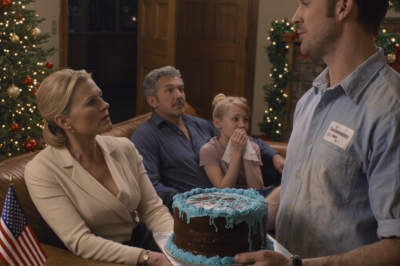
I Came Home On My 23rd Birthday With A Grocery-Store Cake. Mom Said, “No Celebration This Year—Your Sister Needs All Our Attention.” So I Packed A Bag That Night And Disappeared. Years Later, I’m Doing Better Than Anyone Expected—And Now They’re Suddenly Acting Like Family Again.
When I posted that story, I expected maybe a handful of comments and then it would disappear into the Reddit…
End of content
No more pages to load