My Fiancée Said I Was Too Safe Before Our Wedding. She Took a “Break” to Date Someone More…
Sarah leaned back in her chair at the kitchen table, scrolling through her phone while I stirred the stir fry on the stove. Our condo always smelled like whatever I was trying to fix that day—garlic, soy sauce, toasted sesame—and the faint, permanent scent of new paint from the building’s never-ending renovations. The city hummed outside our windows, headlights sliding across the glass like quiet warnings.
We’d been engaged for eight months, and our wedding was set for September 22nd, just four months away. Four months sounded like plenty of time if you said it quickly. It sounded like nothing at all if you’d ever planned anything that involved deposits and timelines and other people’s schedules.
I’d always been the planner in our relationship, handling the details while she focused on her creative work. I didn’t resent it. I liked knowing what was coming. I liked lists. I liked calendars. I liked the calm that came from putting chaos into boxes and labeling them.
“That smells amazing, Alex,” she said without looking up.
Then her thumb paused, her mouth pulled into a grin that wasn’t for me.
“But hey, look at this. Jenna just posted from her bachelorette in Vegas. They did skydiving.”
I plated the food and set it down in front of her, the steam rising between us like something that wanted to be said.
“Skydiving sounds risky,” I told her, and tried to keep it light. “Glad it’s not us.”
She finally put her phone down, but her eyes had that distant look I’d noticed more often lately. The look that meant she was somewhere else—somewhere louder, shinier, less… us.
“Yeah,” she said. “But it’s exciting. Our plans are so standard.”
I sat across from her, fork in hand.
“Standard is good,” I said. “We’ve got the community hall booked, the band, the florist. It’s all coming together.”
I said it like the words could be an anchor.
Sarah worked as a graphic designer for a small firm, but three months ago she’d switched to a hip advertising agency downtown. She’d come home from her first week smelling like someone else’s perfume and rooftop smoke, cheeks flushed from laughing too hard. She’d told me about brainstorm sessions where they threw sticky notes on walls like confetti. About a creative director who called everyone “genius” and meant it. About the open office and the neon sign in the lounge that said DREAM LOUD.
The place was full of young creatives who threw around terms like disruptive innovation and hosted rooftop parties. She started coming home later, her ponytail messier, her lipstick darker, her stories louder.
Her new colleagues—Laya, Harper, and Zoe—were a whirlwind of energy.
Laya was twenty-nine, perpetually single with stories of backpacking through Europe on a whim. She’d sleep on a stranger’s couch in Barcelona and call it “manifesting.” She’d talk about quitting jobs like it was deleting an app.
Harper, thirty-one, had eloped to Bali after knowing her husband for two months. She wore floaty dresses and spoke in quotes like she’d been raised by Pinterest.
Zoe, twenty-seven, was in an open relationship with a DJ who toured festivals. She had a laugh that carried and a tattoo behind her ear that looked like a tiny lightning bolt.
At first, Sarah’s stories about them were fun anecdotes.
“Laya convinced the whole team to do an escape room during lunch today,” she’d say, and I’d laugh, because that sounded harmless.
But gradually, the stories turned into comparisons, and comparisons turned into little cuts.
“Harper says, ‘Predictable guys are like vanilla ice cream.’ Fine, but who wants that every day?”
She said it while twirling noodles around her fork like she was winding up a thought she didn’t want to hear out loud.
The first time she said anything like that, I told myself it was a joke. The second time, it started to feel like a test I didn’t know I was taking.
That night, as we ate, she pushed her food around like the plate had offended her.
“Alex,” she said, and her voice softened the way it did when she wanted something. “Do you ever feel like we’re missing out? Like, life’s too routine?”
I paused midbite.
“Routine?” I repeated, because I needed a second to catch up to what she meant.
I had a steady job as a software engineer. We had a condo with a view. No crazy debt. That was stability, not routine.
“We’re building something,” I said. “That’s not a rut. That’s a foundation.”
She sighed, like foundations were boring.
“Zoe’s boyfriend surprised her with tickets to Coachella last weekend,” she said. “They danced until dawn.”
“And I surprised you with that weekend getaway to the mountains last month,” I reminded her. “We hiked, had picnics. It was peaceful.”
“Peaceful is code for boring,” she muttered.
The word hung in the air.
I set my fork down, because the taste in my mouth changed.
“Boring,” I said. “Is that what you think of me?”
“Not you exactly,” she said quickly, but not quickly enough. “But our life. Laya says, ‘If you’re not taking risks, you’re not living.’”
I felt a knot in my stomach, but I kept my voice even.
“Laya’s the one who quit her job to start a blog about urban foraging, right?” I asked. “And now she’s crashing on friends’ couches.”
Sarah’s eyes flashed.
“She’s adventurous,” she snapped. “You could be more like that.”
We finished dinner in silence.
That was the start.
Over the next few weeks, the comments escalated in a way that made me feel like I was slowly being moved out of my own life. Like the version of me she wanted was taking up more space, and the version of me that existed was shrinking.
I’d come home from work—where I coded reliable systems for a tech company, making $72,000 a year—and find her on the couch, texting her friends with a smile that didn’t reach me.
“Babe,” she’d say, and her tone would be casual, but the words were sharpened. “Harper threw her wedding on a beach in Thailand. No planning, just vibes. Our hall feels so corporate.”
I’d point to the binder on the shelf—our wedding binder—full of confirmations and color swatches and seating chart drafts.
“Corporate?” I’d say. “It’s a community hall. It’s literally the opposite of corporate.”
But she’d just shrug.
We’d budgeted carefully.
Not because we were cheap, but because we were adults who wanted to start our marriage without stepping into a financial hole. The community hall was $5,000, with a $2,000 deposit from my savings. Catering for 100 guests, $3,800. Deposit $1,000 split between us. Band $1,500, paid in full by me. Florist $1,200, deposit $600 shared. Photographer $2,500. Her family’s gift with a $800 deposit. My tux $400 paid. Her gown $2,200 paid by her. Honeymoon to Hawaii, $5,500. Booked through an agency with cancellation insurance for $350.
Total budget, $22,50.
Sensible for our incomes—her $62,000 as a designer.
In my head, those numbers were a map. In her world lately, they started to sound like proof we weren’t living big enough.
Her friends’ extravagant tales made our plans seem lackluster.
“Zoe’s engagement party had fire dancers,” she said one night, scrolling. “Ours is just a backyard barbecue.”
“It’s our families,” I reminded her. “It’s our friends. It’s not a show.”
But Sarah’s attention was drifting toward shows.
One evening, after a long day debugging code that refused to behave, I found her staring at her laptop like it held the answer to something.
“What’s up?” I asked.
She closed it quickly.
“Nothing,” she said. Then, after a beat, “Just thinking about… my friends say you’re too steady, too predictable, no spark.”
The words hit like a cold splash.
I sat beside her on the couch, the cushions dipping under us like we were leaning into something dangerous.
“Spark like what?” I asked.
“Like spontaneity,” she said. “Adventure. They hate how safe you are.”
“Hate me,” I repeated, because that word didn’t belong in our living room. “They’ve met me once.”
“Not hate,” she corrected. “But they think I deserve more excitement.”
“And you?”
She hesitated.
That hesitation was the loudest thing she’d said all week.
“I think maybe they’re on to something,” she admitted.
My chest tightened, but I stayed calm.
“Okay,” I said, because I didn’t know what else to say without making it worse.
The big conversation happened two nights later.
We were watching a movie—some forgettable action thing, the kind we put on when we wanted noise more than we wanted to talk—but she paused it halfway through. The screen froze on a hero mid-punch, and the silence that followed felt like someone shutting a door.
“Alex,” she said. “I need to talk.”
“Sure,” I said.
“I’ve been feeling trapped,” she confessed. “Like, if I marry you now, I’ll always wonder about the wild side.”
“Wild side?”
“Yeah,” she said, eyes bright with the idea of it. “I want to date someone adventurous just for a bit, to see.”
I blinked.
“Date someone else,” I said slowly, making sure I’d heard her right. “Two months before our wedding.”
“Just a break to explore,” she insisted. “Laya says it’s better now than regretting later.”
“Laya,” I said, and my voice came out flatter than I wanted, “who’s never committed to anything.”
“See,” Sarah snapped, “you’re judging. An adventurous guy wouldn’t.”
I looked at her.
The woman I’d built a life with for four years. The woman I’d proposed to on a quiet hike when the air smelled like pine and we were both out of breath in the best way. The woman who used to love how safe I felt.
And suddenly, clarity hit.
Not rage.
Just resolve.
“Okay,” I said.
She stared at me, like she’d expected bargaining, not acceptance.
“I said, ‘Okay, take your break. Date your adventurer.’” My voice was steady—my curse and my gift. “But you said I’m too steady. I’ll change that. I’ll be unpredictable.”
Her eyebrows knit.
“What does that mean?”
“You’ll find out.”
She seemed unsure, but she nodded.
“So,” she said softly, like she was afraid of the word, “we’re on pause.”
“Pause it is.”
She packed a bag and went to stay with Laya that night.
When the door clicked shut behind her, the condo felt different, like the air itself had been rearranged. Her shampoo bottle still sat in the shower. Her shoes still lined the hallway. The engagement photo on the shelf still showed us smiling like we were the kind of couple that didn’t break.
I stood there for a long time, staring at the quiet.
Then I did what I always did when I didn’t know how to feel.
I made a plan.
The next morning, sunlight came through the blinds in thin stripes. I made coffee, but I didn’t drink it. The mug warmed my hand while my mind warmed up to the idea I’d already decided on.
I started calling.
First the hall.
“Hi,” I said when the coordinator answered, and my voice sounded too normal for what I was doing. “Alex Rivera here. Wedding on September 22nd. Need to cancel.”
There was a pause, the quick intake of breath of someone who knew this wasn’t casual.
“I’m sorry,” she said. “Policy over 90 days out. Forfeit deposit, but no more owed. You’re 112 days away.”
“Understood,” I said. “Cancel, please.”
“Done.”
Lost $2,000 of my money.
Catering next.
“Canceling September 22nd wedding,” I said. “Over 90 days.”
“Lose deposit only,” the woman explained.
Lost $500 mine. $500 hers.
Photographer.
Her parents’ deposit was tied up in it, and I refused to let them find out later through some awkward invoice. So I called them first.
“Mr. Chen,” I said when he answered, and I could hear the television in the background. “It’s Alex.”
“Alex!” he said warmly. “Everything okay? Wedding stuff?”
I swallowed.
“Sarah wants a break to date others,” I told him.
Silence.
“What?” he finally said, one sharp syllable.
“Yeah,” I said. “So I’m cancelling.”
Another pause, and then his voice changed—quiet, controlled.
“You’re smart,” he said. “We’ll handle the photographer.”
They insisted on absorbing the $800 loss.
Band.
Paid full.
No refunds within 120 days.
Kept the $1,500.
My loss.
Florist.
Cancelling over 90 days. 50% deposit refund if proof of payment. I sent receipts showing our split. Got my $300 back in a week. Hers stayed, forfeited later.
Honeymoon.
$5,500.
Non-refundable, but insurance covered.
When I called, I expected a fight. Instead, the agent spoke in the calm voice of someone who’d heard this kind of call before.
“Wedding cancellation,” I said. “Need claim.”
“Send proof,” she told me, “like hall email.”
I did.
Refund minus $400 deductible.
$5,100 back.
Net loss on trip $750—insurance plus deductible.
Total out: hall $2,000. Catering my half $500. Band $1,500. Florist $0 refunded. Honeymoon $750.
Recovered via insurance $5,100.
Net cost around $1,150 after all.
Worth every penny.
I didn’t feel proud. Not exactly.
I felt… clear.
Like a fog I hadn’t admitted was there had finally lifted.
Sarah texted after a few days.
How are you?
Fine.
Seeing someone. His name’s Kai. He’s a rock climber.
Cool.
You’re chill about this.
Yep.
She didn’t know about the cancellations. Not yet.
Wedding approached—100 days, 80, 60.
Her social media lit up.
Photos of her on hiking trails, at music festivals, grinning into sunsets with Kai, a thirty-year-old freelance photographer who lived in a van, chasing light like it owed him something. Tattoos of mountains. Quotes about wandering. About embracing the unknown. About the universe providing.
She captioned one: I focused on me.
I’d open the photo and stare at it longer than I wanted to admit, not because I missed her, but because I was trying to understand how someone could trade a life for a mood.
I didn’t comment.
I didn’t message.
I didn’t punish myself by pretending it didn’t sting.
Instead, I upgraded my home office. I learned guitar. I joined a coding meetup.
And in the quiet moments—between the sound of new strings under my fingers and the soft click of my keyboard—I started noticing what I’d been ignoring.
How much of our relationship had been me making things work.
How often I’d interpreted her restlessness as my responsibility.
How I’d been confusing peace with passivity.
My friend Mike came over with pizza one Friday, the kind with extra cheese and zero judgment. He was the only person I could talk to without feeling like I was turning my life into gossip.
He took one look at my face and nodded like he already knew.
“So Sarah’s with this van guy,” he said, dropping onto my couch.
“Yep.”
“And you’re good?”
I surprised myself by smiling.
“Better than good,” I said. “Calculating risks is my job. This one’s clear.”
Mike let out a laugh.
“Man,” he said, “I don’t know whether to be impressed or terrified.”
“Be hungry,” I told him, and opened the pizza.
We ate, and for the first time in weeks, my apartment didn’t feel haunted.
Week five, Sarah posted: Adventure feeds the soul.
Week six: Sometimes stability feels like chains.
She deleted that one soon after.
Week seven, she texted.
Ready to come back?
Okay.
Just okay?
What else?
We need to finalize wedding stuff. It’s soon.
Handled.
Good.
She moved back in the next day.
She showed up with the same suitcase she’d left with, but she looked different. Tired. Windburned. Like the adventure she’d wanted had been colder than she expected.
“Kai was too flaky,” she said that night, sitting at our kitchen table like she hadn’t blown a hole through it. “No plans ever.”
“Sounds unpredictable,” I said.
“Yeah,” she admitted, rubbing her eyes. “But I value your reliability now.”
“Interesting,” I said, and let the word sit there.
“So all good,” she tried.
“Sure,” I said.
She dove into work assuming normalcy.
And I watched her move around our condo like she belonged there again, like she could just step back into our life and the floorboards wouldn’t remember.
For a few days, we played a strange version of us. We talked about groceries. About traffic. About her new project at the agency. About nothing that mattered.
Sometimes she’d reach for my hand, and I’d let her, because I wasn’t sure yet what letting go looked like.
Sometimes she’d kiss my cheek like an apology she didn’t want to say out loud.
And every time she did, I thought about the phone calls I’d made.
About the quiet click of cancellations.
About how I’d changed one thing in our life, and it had shifted everything.
Three days before the wedding, my phone blew up during a meeting.
I stepped out into the hallway, fluorescent lights buzzing above me like a warning signal.
“Alex,” Sarah snapped the moment I answered. “What the hell?”
“What’s wrong?” I asked.
“I called the hall,” she said, breathless. “They said it’s cancelled.”
“Yeah,” I said.
“When?”
“Day after you left.”
“Why?”
I leaned my shoulder against the wall, because my legs suddenly felt too heavy.
“You said I was too steady,” I reminded her. “I got unpredictable.”
“This isn’t a game,” she hissed. “The wedding’s days away.”
It was silence.
Then her voice cracked.
“The honeymoon too?”
“Yep,” I said. “Insurance payout, though. Smart buy.”
“I can’t believe this,” she said.
“You wanted adventure,” I said quietly. “I assumed break meant over.”
“You should have said,” she shot back.
“You didn’t ask.”
“Family’s coming,” she said, desperation leaking through.
“Tell them the truth,” I replied.
She hung up.
Then she called back sobbing.
“Can we rebook?”
“Try,” I said, “but deposits are gone. I don’t have cash.”
“Alex,” she pleaded, and for the first time in a long time, she sounded like the Sarah I’d loved. “Please. We’re not over.”
“We are,” I said.
The words were calm. Final.
“You dated Kai,” I continued. “Break. Permanent now.”
“I hate this,” she whispered.
“You got your wish,” I said. “You wanted less steady.”
Her friends texted me that afternoon.
Laya: You’re cruel.
Harper: Sarah’s broken.
Zoe: You didn’t have to go nuclear.
I read the messages and felt something like amusement, sharp and bitter.
Me? Unpredictable.
Now your advice, Harper.
Sarah was happy climbing rocks.
Her parents called me that night.
“Alex,” Mr. Chen said, voice heavy. “We heard.”
“You did,” I said.
“You did right,” he told me. “I’m sorry.”
“Thanks,” I said.
“And… sorry about photographer,” he added.
“Forget it,” I said.
He exhaled.
“Sarah’s foolish,” he said, not cruelly, just tiredly.
Sarah moved out to Zoe’s.
She posted: Betrayal cuts deep.
The comments flooded in.
Queen, rise above his loss.
You deserve better.
Men fear strong women.
I didn’t respond.
I posted a guitar pick on my own page.
New hobby unlocked.
Friends commented:
Looks fun.
Proud of you.
A week later, Sarah texted.
Want my catering half back? $500.
Okay, I wrote.
But want my share of coffee table? $300.
Net. You owe $200.
Ridiculous.
So, is this after dating Kai?
No reply.
Months later, a mutual friend said she cut ties with Laya. Too pushy. She dated a planner next. Steady type.
Five months on, she texted: sorry for all.
Okay.
Try again.
No.
Why?
You broke for adventure pre-wedding. Can’t forget.
Mistakes happen.
Consequences too.
Miss us.
Don’t harsh.
Honest. You wanted less steady. Changed.
No response.
Seven months later, I met Lena.
It happened in the least cinematic way possible, which was exactly why it felt real.
I was at a coffee shop near my office—one of those places that smelled like cinnamon and ambition, with mismatched chairs and a barista who wrote tiny hearts on the lids. I’d brought my laptop, a notebook, and the stubborn belief that if I kept moving forward, eventually my life would catch up.
She was sitting alone at a corner table, grading papers with a pen that had chewed edges. Her hair was pulled into a loose bun that kept slipping. She had reading glasses perched on her head like she’d forgotten they were there.
When she looked up, her eyes met mine for half a second, and she gave me a small smile—polite, not flirtatious. The kind you give someone when you’re both sharing the same quiet space and neither of you wants to make it weird.
Then she dropped her pen.
It rolled under my chair.
I picked it up and handed it to her.
“Thanks,” she said.
Her voice was warm, tired in a way that reminded me of my own long days.
“No problem,” I told her.
I should’ve walked away.
Instead, I nodded at the stack of papers.
“Teacher?” I asked.
She sighed dramatically.
“Unfortunately,” she said, and then her mouth twitched like she was joking. “Middle school. So it’s less teaching and more… crowd control.”
I laughed, and it surprised me.
“I’m Alex,” I said.
“Lena,” she replied.
We didn’t exchange numbers that day. We didn’t do the thing where someone drops a smooth line and the universe applauds.
We just talked.
About coffee. About how kids could be both hilarious and exhausting. About the fact that she made $55,000 a year and still somehow managed to buy books she didn’t have shelf space for. About how my old Subaru made a noise that sounded like a dying lawnmower but refused to quit.
She asked what I did.
“Software,” I said.
Her face brightened.
“You must be so logical,” she said.
“I try,” I replied.
“That’s funny,” she said, tapping her pen against her papers. “I spend my whole day teaching kids that logic matters. And then they go home and do the exact opposite.”
We talked until my coffee went cold.
And when I left, my chest felt lighter—not because I’d found someone new, but because I’d found someone who didn’t look at calm like it was a flaw.
Our first date was a walk.
Not a fancy dinner. Not a rooftop party. Not a “vibe.”
Just a walk through a park with trees turning late-summer gold, the air cool enough that you wanted to keep moving.
We talked about books. She liked novels that made her cry, and she wasn’t embarrassed about it.
I told her I was learning guitar.
She laughed.
“Why?” she asked.
“Because I needed something that wasn’t a screen,” I said.
“That’s fair,” she replied.
Our second date was coffee again.
Our third date, we sat in my car with takeout and watched rain hit the windshield like applause.
And somewhere between her laughter and her calm questions, I told her the story.
Not all of it.
Not the messy details.
Just the bones of it.
“So she wanted adventure,” Lena said slowly, hands wrapped around her cup. “And you cancelled the wedding quietly.”
“Yep,” I admitted.
Lena stared at me for a moment.
Then she smiled.
“That’s boldly decisive,” she said. “Out of character.”
I let out a breath I didn’t realize I’d been holding.
“Yeah,” I said. “It was.”
She tilted her head.
“Sometimes,” she said gently, “people mistake kindness for permission.”
Her words landed in my chest like something I’d needed to hear for years.
With Lena, things moved slow.
Not because there wasn’t chemistry, but because there was respect.
We planned picnics that actually happened. We cooked dinners where nobody compared anyone to vanilla ice cream. We argued about algorithms versus art in a way that made us both laugh. She’d listen when I talked about work, even if she didn’t understand every technical thing. I’d listen when she talked about her students, even when the stories sounded like chaos.
There was no social media flaunting. No captions about wandering. No photos staged for strangers.
Just us.
Eight months in, calm and mutual, no drama.
Last month, Sarah texted.
Heard you’re serious.
Yep.
Happy for you.
Thanks.
I stared at the screen for a long time.
I didn’t feel anger.
I didn’t feel victory.
I felt closure.
No bitterness.
Just gratitude for dodging.
Lena and I planned slow picnics, guitar duets, debates that ended with kisses instead of silence.
Turns out one unpredictable act sufficed.
Now I’m steady with edges.
I know when to hold.
I know when to fold.
Sarah sought adventure.
I delivered once.
She disliked it.
Ironic.
And if I’m being honest, the strangest part isn’t that she left.
It’s that she thought safety was something you outgrow.
Because what I learned—what I carry now—is that real safety isn’t boring.
It’s rare.
It’s built.
And when someone calls it vanilla like it’s an insult, it’s not because vanilla is worthless.
It’s because they’ve never learned how to taste what’s steady without needing it to burn.
September 22 still came, even though the wedding didn’t.
That morning, I woke up before my alarm like my body hadn’t gotten the memo. The light in our bedroom was soft and pale, the kind that used to make Sarah stretch and hum, her hair a mess against the pillow. The spot beside me was empty.
I lay there for a minute listening to the building settle. Somewhere down the hall, a neighbor’s shower turned on. A garbage truck groaned outside. Life did what it always did—kept moving, even when you’d planned it to stop.
On my nightstand, my phone buzzed.
A calendar reminder.
WEDDING DAY.
I stared at it until the words stopped looking real.
Then I opened the reminder and deleted it. Not dramatically. Just a tap. A quiet little erasure.
I didn’t know what you were supposed to do on a day like that. Some people might have spent it in bed. Some people might have gone out and tried to turn it into a victory lap.
I made coffee.
I took a long shower.
I wore jeans and a clean T‑shirt like it was any other Saturday.
And then I pulled the wedding binder off the shelf.
It was thick and heavy, full of tabs and receipts and notes written in my neat, tight handwriting. It looked like proof I had tried. Proof I’d believed.
I flipped through the pages—seating chart drafts, vendor emails, a printed photo of the hall with the tables arranged in a way that made my chest ache. At the back, I found the little envelope with the sample invitations.
Alex Rivera & Sarah Chen.
The names looked like a promise that had been printed too early.
I didn’t rip anything up. I didn’t throw it across the room. I didn’t burn it in the sink like some dramatic movie scene.
I just slid the binder into a cardboard box with old cables and extra lightbulbs and the kind of stuff you keep because someday might need it.
Then I taped the box shut.
A small, ordinary act.
A burial.
At nine, my mom called.
She didn’t ask why the wedding wasn’t happening. She didn’t press. She had this gentle way of letting people hold their own stories until they were ready to share them.
“Baby,” she said, and even though I was thirty-two, that word still made my throat tighten. “You eating?”
“I’m fine,” I told her.
She made a sound that said she didn’t believe me, but she didn’t argue.
“Come by,” she said instead. “I made breakfast. Your dad’s pretending he doesn’t want pancakes, but he already asked if we had syrup.”
I could’ve said no. I could’ve stayed in my condo and tried to prove I was okay by being alone.
But something in me didn’t want the day to be quiet.
So I drove across town.
My parents’ house looked the same as it always had—small, tidy, the lawn trimmed in a way that said my dad still believed in doing things right. A little American flag stuck out of a planter by the porch. My mom had hung a wreath that wasn’t flashy, just simple green with one red bow.
Inside, the kitchen smelled like butter and cinnamon.
My dad flipped pancakes like it was a sport. My mom set a plate in front of me like feeding me would fix everything.
They didn’t mention September 22.
They didn’t mention Sarah.
They asked about work. About Mike. About the guitar I’d started learning.
And when my mom finally looked at me a little too long, like she was reading the parts of me I hadn’t said out loud, she reached across the table and squeezed my wrist.
“You can miss her and still know you did the right thing,” she said softly.
My chest tightened.
“I don’t know what I feel,” I admitted.
“That’s okay,” my dad said, surprising me. He wasn’t the type to talk about feelings. He was the type to fix a leaky faucet and call that love.
He slid another pancake onto my plate.
“Just don’t confuse calm with empty,” he added. “Calm can be full.”
I nodded, because it was the kind of sentence you didn’t forget.
When I got back to my condo, there was a message waiting.
From Sarah.
I stared at her name until my thumb went numb.
Then I opened it.
Happy… day, I guess.
I read it twice.
Happy… day.
Like it was a holiday.
Like it was a joke.
Like it was something you could wave at from a distance.
I didn’t respond.
I set my phone face down.
In the afternoon, I went for a walk.
Not to prove anything, but because my body needed to move or I was going to start shaking.
I ended up at the same trail where I’d proposed.
The parking lot was full of families and couples and people with dogs. Kids ran past with sticky hands and loud laughter. The air smelled like pine and late summer heat.
I walked until my legs burned.
When I reached the spot—the little overlook with the view of the water—I stopped.
I remembered Sarah’s face that day. The way she’d covered her mouth with her hand, eyes shining. The way she’d said yes like it was the easiest thing in the world.
And I realized something that felt both sad and freeing.
She hadn’t been lying then.
She’d meant it.
But meaning something in a moment didn’t guarantee you’d protect it when it got boring, or hard, or unglamorous.
I sat on a rock and watched the sun slide behind the trees.
Then I went home.
I didn’t do anything dramatic.
I just let the day pass.
The next week, the questions started.
Coworkers had taken time off for my wedding. People had been planning outfits. My manager had made a joke about not losing me to married life.
Monday morning, I walked into the office with a coffee in my hand and a calm face I’d practiced in the mirror.
“So,” someone said with a grin, “how’s the countdown?”
I felt my stomach drop, but I kept my voice even.
“It’s not happening,” I said.
The silence that followed was the kind that made the air feel heavier.
“Oh,” my coworker said, blinking like he couldn’t compute. “I’m… sorry.”
“Thanks,” I said.
Then I turned back to my monitor and opened my code like that was a normal thing to do.
After that, people stopped asking.
They started leaving little condolences on my desk—protein bars, sticky notes that said “hang in there,” awkward pats on the shoulder.
Mike handled it best.
He came over with tacos one night and didn’t say a single supportive thing.
He just dropped the bag on my counter and said, “If you cry, don’t get it on the guac.”
I laughed so hard I almost did cry.
Around that time, Sarah’s friends got bored of being angry at me and started being curious instead.
Laya sent a long message about how relationships needed “elasticity” and “freedom.”
Harper posted a quote that said, Some men only love you when you’re small.
Zoe liked it.
I didn’t respond.
I didn’t defend myself.
I realized something I hadn’t understood before.
If you spend your life trying to convince people you’re not the villain in their story, you’ll never get to be the hero in your own.
Sarah, meanwhile, cycled through emotions like she was trying on outfits.
One week she posted photos of her laughing with friends at a rooftop bar.
The next, a sad caption about learning lessons.
Sometimes she texted me like we were still teammates.
Can you forward me the florist’s email?
I’ve been thinking about the guest list.
Do you still have my blue sweater?
Each message felt like she was pushing on a door that no longer existed.
I answered the practical ones.
Florist: sent.
Sweater: left with Zoe.
Guest list: there is no guest list.
She didn’t like that.
One night she showed up at my door without warning.
I opened it and there she was, hair pulled back, eyes red, cheeks flushed like she’d been walking fast or crying too hard.
“I need to talk,” she said.
Behind her, the hallway light made her look like a stranger with a familiar face.
“Okay,” I said, because part of me still defaulted to calm.
She stepped inside like she belonged there.
Her gaze immediately went to the shelf where the engagement photo used to be.
I’d taken it down.
Her eyes flicked to my guitar in the corner.
“What is this?” she asked, half offended.
“A guitar,” I said.
She let out a shaky laugh.
“You always said you didn’t have time for hobbies,” she snapped. “You always said you were tired.”
“I made time,” I replied.
“For me.”
She stared at me like that was the most insulting thing I could’ve said.
“I messed up,” she whispered.
I didn’t jump in to reassure her.
I didn’t rush to fix it.
I just waited.
She swallowed.
“Kai wasn’t what I thought,” she said. “He’s… he’s a mess, Alex. He talks about freedom, but he can’t even show up on time. He forgot my birthday. He forgot my—”
She stopped, like she’d almost said something she didn’t want to admit mattered.
“And Laya,” she continued, voice rising, “Laya kept saying I needed to live, I needed to feel alive, I needed to—”
“She didn’t make you leave,” I said quietly.
Sarah flinched.
“I know,” she whispered.
There it was.
The truth that didn’t need a villain other than the person standing in front of me.
“I didn’t think you’d actually… end it,” she said. “I thought you’d fight for me.”
I felt something shift in my chest.
“You wanted me to fight for you,” I said, “while you tried out other people.”
She opened her mouth, then closed it.
“I didn’t know,” she insisted, desperate. “I didn’t know it would feel like this.”
“That’s the thing,” I said. “You wanted me to be the safe place you could come back to. You wanted stability like it was a backup plan.”
Her eyes filled.
“I love you,” she said.
I believed her.
And I still said, “No.”
She looked startled.
“I love you,” I repeated softly, because my voice came out gentler than my words. “But I’m not available for this anymore.”
She sank onto the couch like her knees stopped working.
“You’re really doing this,” she whispered.
“I already did,” I said.
She stared around the condo like she was trying to find the version of us she could climb back into.
Then she looked at me.
“You’re so calm,” she spat, like it was a sin.
I let out a breath.
“I’m not calm,” I told her. “I’m just done negotiating with someone who treats commitment like a mood.”
That landed.
She stood up.
“Fine,” she said, wiping her face hard. “Fine. You think you’re so… mature. So steady.”
“I don’t think,” I said. “I know what I can live with.”
She stared at me for a long moment.
Then she left.
The door clicked shut.
And I didn’t chase her.
That night, I expected to feel triumphant.
I didn’t.
I felt sad.
Not the kind of sad that makes you fall apart, but the kind that sits in your body like a bruise.
I went to the kitchen.
I washed a plate that wasn’t dirty.
Then I picked up my guitar and pressed my fingers down on the strings until they hurt.
Pain was simple.
Pain made sense.
The days after that got quieter.
Not empty.
Just quieter.
I started learning what it felt like to live without waiting for someone else’s opinion of your life.
I took my lunch breaks outside instead of at my desk.
I went to the gym.
I stopped checking Sarah’s social media.
At first, it felt like ripping off a bandage.
Then it felt like breathing.
Mike convinced me to go to an open mic night.
“Just watch,” he said. “Don’t be weird.”
“Watching isn’t weird,” I told him.
“You make watching weird,” he replied.
The place was a small bar with Christmas lights still hanging year-round. People sat on mismatched stools, clapping too loudly for strangers.
When someone called my name—because Mike, apparently, had signed me up—I froze.
“No,” I hissed.
“You’re going,” Mike whispered back. “Be unpredictable.”
I wanted to punch him.
Instead, I walked to the little stage with my guitar and my hands shaking.
I played three chords.
They weren’t perfect.
But they were mine.
When I finished, the room clapped.
Not because I was great.
Because I’d shown up.
Outside afterward, the air was cold and clean.
Mike nudged me.
“See?” he said. “Adventure.”
I laughed, and it felt real.
Later that winter, Sarah texted again.
I miss you.
I stared at it.
Then I put my phone down.
Because missing someone wasn’t a contract.
Because loneliness wasn’t a reason to return to a life where you were tolerated until someone got bored.
A month after that, her mom called.
Mrs. Chen’s voice was tight.
“Alex,” she said. “Can you come by? We need to talk.”
I hesitated.
Then I went.
Their house was warm, tidy, the kind of place that smelled like rice and ginger. Family photos lined the hallway—Sarah at graduation, Sarah holding a puppy, Sarah smiling on a beach.
Mrs. Chen poured tea with shaking hands.
Mr. Chen sat across from me with a stiffness that looked like heartbreak in a man who didn’t know how to show it.
“We’re sorry,” Mrs. Chen said first, like the words had been burning her tongue.
Mr. Chen exhaled.
“We raised her better,” he added quietly.
I swallowed.
“It’s not your fault,” I said.
Mr. Chen nodded once.
“I know,” he said. “But we still feel it.”
Mrs. Chen reached out and touched my arm.
“You were good to her,” she said.
I didn’t argue.
Because being good wasn’t the same as being chosen.
They offered me leftovers to take home, because that’s what parents did when they didn’t know how to fix something.
I took the container.
I thanked them.
And when I left, the sadness in my chest softened into something like peace.
By spring, Sarah’s messages got fewer.
Not because she’d healed.
Because she’d found a new story.
I heard through friends that she’d quit the agency. That she’d blamed Laya for everything. That she’d tried dating someone “safe” again and got angry when he didn’t thrill her.
I didn’t wish her pain.
I didn’t wish her happiness either.
I wished her accountability.
Because that was the thing she’d always avoided.
And then—seven months after the wedding date that never happened—I met Lena.
That part, I’d already told.
But what I didn’t know then was how different it would feel to be with someone who didn’t treat stability like an insult.
Lena was steady in her own way.
Not neat.
Not perfectly organized.
But grounded.
She paid her bills late sometimes because she got distracted by grading.
She forgot her keys on the table.
She cried at commercials about dogs.
And yet she showed up.
Every time.
When she said she’d call, she called.
When she said she’d meet me at six, she was there at six—sometimes at five fifty-five, breathless because she’d run from her car.
She didn’t need our life to look exciting from the outside.
She needed it to feel safe on the inside.
One Saturday, a few months in, she asked me to come to her school fundraiser.
“It’s not glamorous,” she warned. “It’s… a gymnasium and cupcakes.”
I smiled.
“That sounds perfect,” I said.
She blinked like she wasn’t used to that answer.
At the fundraiser, kids ran around with face paint and sticky fingers. Lena moved through them like she belonged to chaos, greeting parents, laughing with teachers.
She introduced me as “Alex,” not “my boyfriend,” not “my future,” not like I was a trophy.
Just Alex.
And when a kid spilled punch near my shoes, she winced.
“I’m sorry,” she whispered.
I shrugged.
“It’s just punch,” I said.
Lena stared at me.
“You really are… calm,” she said, but this time it wasn’t an accusation.
It was admiration.
That night, after we drove home with cupcake frosting on our fingers, she leaned her head on my shoulder.
“I like how you live,” she said softly.
I didn’t know what to do with that.
So I just said, “I like how you live too.”
In the summer, Lena and I took a weekend trip.
Not a big one.
Not a dramatic one.
Just a cabin by a lake with bad cell service and a porch swing that creaked.
The first night, we sat outside under string lights and listened to crickets.
Lena wrapped herself in a blanket and watched me tune my guitar.
“You’re getting better,” she said.
“Don’t lie,” I told her.
“I’m not,” she insisted. “You’re getting… looser.”
I laughed.
“That’s one way to say I’m making fewer mistakes.”
“No,” she said, shaking her head. “It’s not about mistakes. It’s like… you’re not trying so hard to control the outcome.”
Her words made my chest tighten.
Because she was right.
With Sarah, I’d spent so much time trying to keep the peace that I’d forgotten peace was supposed to include me.
With Lena, I didn’t have to bargain for stability.
It was just there.
It wasn’t vanilla.
It was home.
Around that time, Sarah texted again.
I shouldn’t have looked.
But I did.
I heard you’re happy.
I stared at the message.
Then another came.
I’m sorry I called it boring. I didn’t understand what I had.
My fingers hovered over the screen.
A year ago, I would’ve written something long. Something careful. Something that tried to soothe her guilt.
Instead, I wrote two words.
I hope so.
Then I put my phone down.
Lena came out onto the porch with two mugs of tea.
“Everything okay?” she asked.
I nodded.
“Yeah,” I said, and I meant it.
Because the truth was, Sarah’s apology didn’t change the past.
It didn’t rebuild what she’d broken.
It didn’t erase the moment she’d looked at our life and called it chains.
But it did something else.
It confirmed what I’d already learned.
That some people don’t recognize safety until they’re freezing.
And some people—if you’re lucky—you meet after you stop chasing someone else’s definition of excitement.
Lena sat beside me and handed me a mug.
Her fingers brushed mine.
No fireworks.
No skydiving.
No rooftop party.
Just a small touch that felt like a promise.
Later that night, she asked me a question like she was afraid of the answer.
“Do you ever regret it?” she said. “Cancelling everything. Ending it that way.”
I looked out at the dark lake.
I thought about Sarah’s face the day she left.
I thought about the door clicking shut.
I thought about the way my stomach had twisted the first time she called me boring.
I thought about September 22.
And then I looked at Lena.
“No,” I said.
She searched my face.
“Not even a little?” she asked.
I shook my head.
“I regret that it had to happen,” I admitted. “I regret that I loved someone who didn’t value what we built.”
Lena’s eyes softened.
“But I don’t regret choosing myself,” I finished. “I don’t regret learning I’m allowed to have a boundary. I don’t regret finding out that being steady doesn’t mean being weak.”
Lena exhaled like she’d been holding her breath.
“Good,” she whispered.
Then she leaned in and kissed me.
It wasn’t a movie kiss.
It didn’t come with a soundtrack.
It was just real.
And maybe that’s what I’d been trying to say all along.
That the wild side isn’t always louder.
Sometimes the wildest thing you can do is walk away from the person who assumes you’ll always stay.
Sometimes the bravest thing you can do is cancel the life you planned when the person beside you stops choosing it.
And sometimes, the most unpredictable act you’ll ever make is deciding that your calm is worth protecting.
Because peace isn’t boring.
It’s earned.
It’s built.
And when someone finally knows how to taste it—really taste it—they don’t confuse it with chains.
They call it what it is.
News
On New Year’s Eve, My Parents Shut Down My Proposal, Saying “You Shouldn’t Carry The Family Name,” & That My Brother Should Marry First. So I Cut Ties & Moved On — Until Yrs Later A Hospital Confession Revealed Why I Was Only Kept In Their Lives At All.
On New Year’s Eve, My Parents Shut Down My Proposal, Saying “You Don’t Deserve To Carry The Family…” On New…
I Walked Into My Brother’s Engagement Party. The Bride Whispered With A Sneer: “The Country Girl Is Here!”. She Didn’t Know I Owned The Hotel Or That The Bride’s Family Was About To Learn…
They Mocked Me at My Brother’s Engagement — Then I Revealed I Own the Company They Work For And… I…

My Wife Took Over Her Father’s Company After His Sudden Passing. Three Days Later, She Slid My Badge Across The Desk And Said, “Your Role Here Is Over.” I Didn’t Argue. I Just Checked The Calendar—Because The Board Meeting Scheduled For Friday Was Set At My Request, And She Didn’t Know Why Yet.
My Wife Took Over Her Father’s Company After His Sudden Death. Three Days Later, She Removed My Access Badge and…
My Brother Demanded To Propose At My Wedding Because “He’s Older.” My Parents And Grandma Took His Side. I Didn’t Argue— I Just Saved Every Message, Quietly Confirmed Every Detail With The Wedding Team, And Let Him Think He’d Won. He Still Showed Up Ready To Steal The Moment… And That’s When My Plan Kicked In. By The End Of The Night, He Wasn’t The One Getting Cheers.
My brother demanded to propose at my wedding because he’s older. My Brother Demanded To Propose At My Wedding Because…
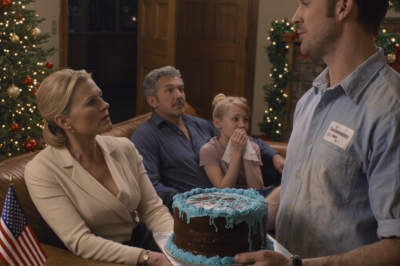
I Came Home On My 23rd Birthday With A Grocery-Store Cake. Mom Said, “No Celebration This Year—Your Sister Needs All Our Attention.” So I Packed A Bag That Night And Disappeared. Years Later, I’m Doing Better Than Anyone Expected—And Now They’re Suddenly Acting Like Family Again.
When I posted that story, I expected maybe a handful of comments and then it would disappear into the Reddit…

“Your Kids Don’t Really Fit My Daughter’s Birthday,” My Sister Announced. My Children Went Quiet. My Husband Looked At The Family, Then At Our Kids—And Without Raising His Voice, Set His Phone Down, Stood Up, And Said One Calm Sentence That Made Every Smile Fade.
My Husband Watched Them Strip Me of My Seat—So I Walked Away and Destroyed Him Calmly | Storytime My name…
End of content
No more pages to load